Donald Trump, a golf course owner and enthusiast of the sport, has been elected president, and many representatives of the golf industry are glad to have him in their corner.
“We’re in the business of educating policymakers about the value of golf in general, and golf course management, in particular,” says Robert Helland, director of congressional and federal affairs at the Golf Course Superintendents Association of America. “It is a good thing that Trump has such a relationship with golf and understands the economic, environmental and charitable impact it has on the country.”
Helland sees Trump’s election as a step in the right direction when it comes to environmental issues, possibly leading to a reevaluation of how the Environmental Protection Agency defines waters of the United States and regulates pesticides. Trump could also exert significant influence over labor issues, such as the Department of Labor’s overtime rule and H-2B visa laws.
Trump will likely precipitate more construction and renovation throughout the golf industry, says Justin Apel, executive director of the Golf Course Builders Association of America. If the EPA redefines waters of the United States, for instance, development will become easier. Additionally, Apel says, the president-elect’s plans to create a more streamlined tax code, improve infrastructure and encourage economic development will initiate a positive trickle-down effect.
With Trump in office, the EPA will go back to enforcing established laws congressional leaders accused the agency of breaking under President Obama, says David Crow, owner of D.C. Legislative and Regulatory Services. “Anything you change that the president did, starting with all these executive orders, you’re going to hear constantly that the new president’s breaking the law, doing all these things, when in fact all he’s doing is going back to what the law said,” Crow says. “So there’s going to be a ferocious counterattack on us. But in terms of the people regulating us — the biggest change in my lifetime, and an enormous breath of fresh air.”
As Trump’s presidency approaches, stakeholders in the golf industry can expect new plans in some key areas.
WOTUS rule
In 2015, the EPA and the Department of Defense passed the Waters of the United States rule, which defines federally controlled waters referenced in the 1972 Clean Water Act. On the campaign trail, Trump said he would eliminate WOTUS.
“The GCSAA opposes WOTUS because of its overreach and lack of clarity, but we support the federal Clean Water Act,” Helland says. “We think that the state and local (governments) and the stakeholders, such as ours, need to be a part of this rule-making process in the future.”
There are pieces of legislation in the Republican-majority Congress that oppose the WOTUS Rule that the GCSAA supports, Helland says. One of these would defund the rule, and the other would kill it. A court could also make the decision to kill the rule.
Congress passed a law to overturn WOTUS, but President Obama vetoed it, Crow says. Additionally, he says, the House Oversight and Government Reform Committee investigated its rule-making process and found the EPA brushed off concerns from the U.S. Army Corps of Engineers and hastily sent the regulation through the Office of Management and Budget’s Investigative Office without giving the office enough time to react.
“The day the regulation was released — it’s still not in effect because of the courts — but EPA released something saying there were a million comments supporting it,” Crow says. “And what they did is took the Obama mailing list and just stuck that onto the website. Those people hadn’t written in on the regulation at all.”
The EPA states that it and the Army Corps did perform extensive outreach on the rule, and hosted more than 400 meetings across the country that resulted in more than a million genuine public comments. “EPA officials visited farms in Arizona, Colorado, Maryland, Mississippi, Missouri, New York, Pennsylvania, Texas and Vermont,” the agency states on its blog.
More decisions about how to protect U.S. waters should be made at the local and state level, and that could happen with Trump in office, Helland says. “We don’t oppose a federal role in this under the Clean Water Act,” he says. “We think the Clean Water Act is a good law. What we oppose is this effort to basically take a lot of waters and put them under federal control, which is what would happen here.”
Pesticide restrictions
Under the Obama administration, the EPA has held a stance on pesticides that Helland says is based more on political perception than sound science.
Helland hopes the EPA under Trump will reaffirm the Federal Insecticide, Fungicide, and Rodenticide Act. “GCSAA believes that all pesticide uses should be under the legal primacy of the Federal Insecticide, Fungicide, and Rodenticide Act,” he says. The GCSAA notes on its website that FIFRA began to require permits in 2011 for pesticides applied “in, over or near ‘waters of the U.S.’”
In 1996, the Food Quality Protection Act amended FIFRA, allowing for cost-benefit analyses and real data, Crow says. Under Obama, though, the EPA’s data has become more hypothetical and politicized, he says.
On its website, the EPA offers a different explanation to its approach. “Science is the backbone of the EPA’s decision-making,” it states. “The Agency’s ability to pursue its mission to protect human health and the environment depends upon the integrity and quality of the science on which it relies.”
What Crow and others in the golf industry view as overreach by the Obama administration extends beyond partisan politics, Crow says. “Under Bill Clinton’s administration, where FQPA passed, with (noted environmentalist) Al Gore as his vice president, we were able to get a reasonable regulatory structure and interpretation of the law,” he adds.
Another disagreement between the golf industry and the EPA surrounds methyl bromide, which the agency began to phase out in 2005. “In the atmosphere, methyl bromide depletes the ozone layer and allows increased ultraviolet radiation to reach the earth's surface,” the EPA’s site states.
Although he has not taken a public stance on methyl bromide specifically, Trump has stated climate change is naturally occurring and has selected a climate change skeptic, Myron Ebell, to lead his EPA transition. The EPA has declined to comment on what effect Trump and Ebell could have on regulatory efforts at the agency.
With a Trump presidency, regulations on methyl bromide could be less restrictive than they were under Obama, Apel says. “I’m hoping the next administration will actually look at restrictions, and utilize science — utilize a better basis — for making those types of decisions,” he says. “When warranted, obviously, we need some regulations, but the approach of the old administration was reckless at times.”
Overtime rule
Another Obama-era rule that many golf industry representatives oppose is the Department of Labor’s new overtime rule, which goes into effect Dec. 1. The rule increases the salary threshold for overtime-exempt workers to $47,476, more than double its current threshold of $23,660.
While the Department of Labor drafted the rule with the intent to improve wages and give workers fair pay, many opponents in the golf industry cite that maintenance workers such as assistant superintendents could lose hours or their jobs.
In August, Trump said he would exempt small businesses from the rule, but he might not have been familiar with the rule at the time, Politico reports.
“The overtime rule’s effective date remains Dec. 1,” says Jason Surbey, a Department of Labor spokesman. “While we cannot comment on what could occur after Jan. 20, we are focused right now on helping employers come into compliance by Dec. 1, and it should be noted that employers large and small across all industries have already taken steps to come into compliance and will be operating under the new rule’s requirements at that time. The new rule will benefit millions of Americans as it results in higher earnings for middle income workers.”
Although the rule will still go into effect Dec. 1, the Republican Congress will continue to fight against it, Helland says. “The tools to repeal the rule include repealing it outright by legislation, or having the agency step in and issue a new rule, which would take time,” he says. “There’s already legislation pending in Congress to delay the phases of the rule and a second bill to prevent it from taking effect.”
H-2B visas
At his own golf courses, Trump has made use of H-2B visas for guest workers, and industry representatives are hopeful he will continue to support the H-2B and Returning Worker Exemptions.
“I think the new administration has an opportunity to create a program that can continue the successes of the H-2B Program with meeting the goal of having a safe workforce, too — a proper immigration program that allows those programs to not be so scrutinized,” Apel says.
Trump’s support of H-2B visas doesn’t conflict with his plans to tighten borders and deport undocumented immigrants, Helland says, because workers with H-2B visas are in the country temporarily. “The visa is not citizenship, nor is it a path to citizenship,” he says.
The Department of Labor declined to comment on what Trump’s presidency could mean for H-2B visa laws.
Superintendents work hard to fill their positions, but people often don’t take them, Helland says. The H-2B visa program helps to resolve those issues.
Community action
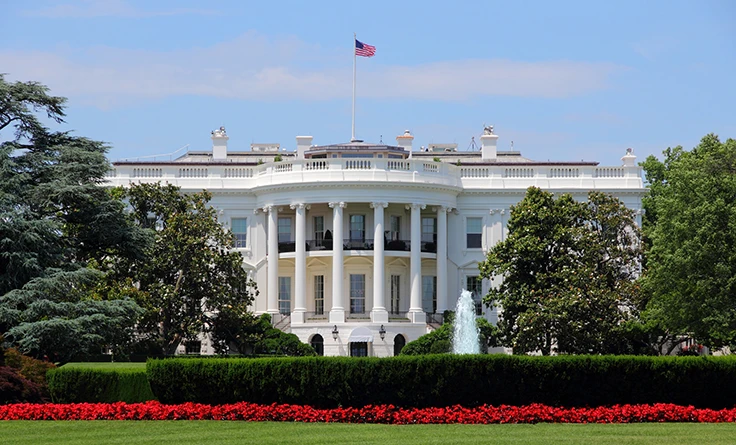
The president-elect’s background in golf is a plus, but people still need to educate each other on the importance of golf at local levels, Apel says. “I think regardless of who takes over the White House and whatever majority takes over the Senate or the House, there’s some important attributes of golf that need to be communicated to all decision-makers — to neighbors, to friends, to family,” he says. “Everybody needs to know and hear the story of how beneficial golf can be.”
Patrick Williams is a GCI contributing editor.
RELATED
Click here for Pat Jones' thoughts on what Donald Trump's win means for the industry.