Paige Johnson / Davey Tree (2)
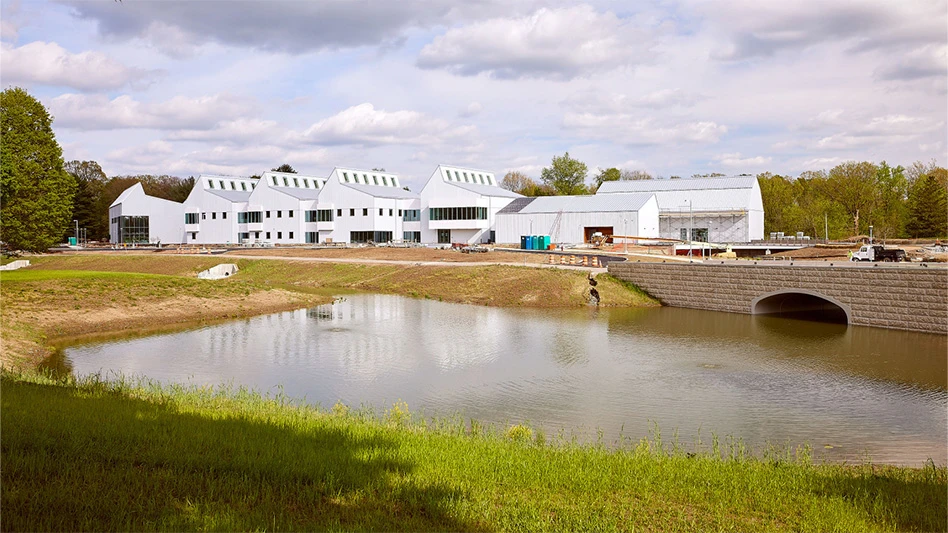
Davey Tree’s Science, Employee Education and Development Campus has opened its doors for employees to begin utilizing the former Oak Knolls golf course facility.
To train employees and further research, Davey Tree expanded its operations, acquiring about 200 acres composed of the course and Franklin Elementary School in Kent, Ohio, in 2016. The former golf course property and its “mature trees and natural resources made it perfect for this,” says Jill Rebuck, senior project manager for Davey Tree's corporate communications.
After the company purchased the properties in 2016, they were unsure what to do with the land until 2022, when they broke ground and began construction, Rebuck adds.
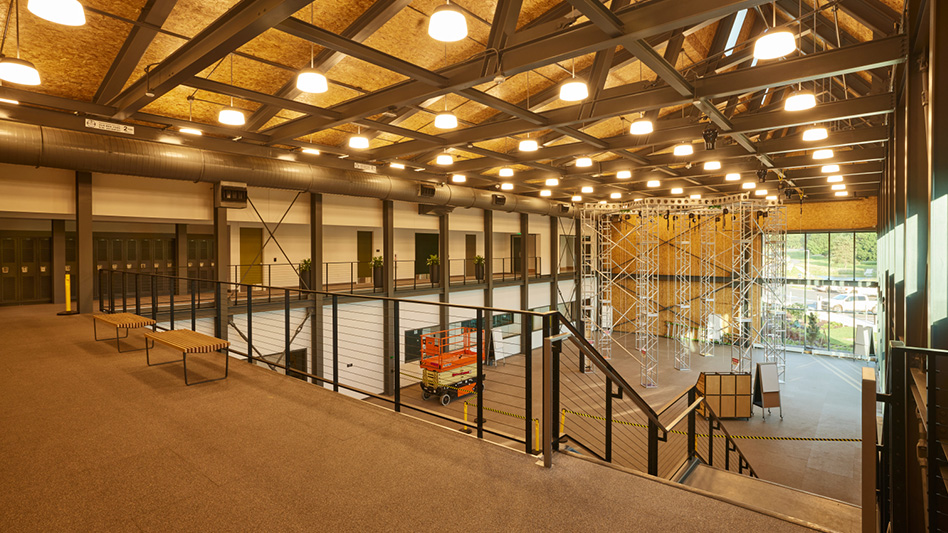
In addition to cubicles and conference rooms, the campus also features four classrooms, an archival space storing Frank Swift Chase oil paintings from past advertisements, two laboratories, an event center and a 10,700-square-foot at-height climbing training center.
In its old institute, the company was able to house two classrooms; two more will help accommodate the 50-employee national and Canadian month-long training hosted during the winter.
The climbing training center, meanwhile, will enable climbing instructors to monitor every move a trainee makes while attempting to scale the nine metal rods. When preparing to mount, the climber is attached to a safety device connected to the climbing center, preventing dangerous falls.
Davey Tree arborist skills trainer Tim Bushnell says the structure, created in collaboration with the at-height training organization Education Now Safety Assured, allows the company to create a low-stress environment while training. “They lean back, they don’t go anywhere,” he says. “They get caught by land, the device and everything is fine, no problem.”
The company also offers advanced training for experienced climbers, using a speaker system to play loud sounds they would normally encounter in the field.
“We can bring in different noises, we can bring in chainsaw noise and we can make it so that you can’t really hear each other,” Bushnell adds, “and we can make them use the communication systems that we have.”
The company can supervise outdoor training using the 50-foot-tall canopy walk outside of the campus’ main building.
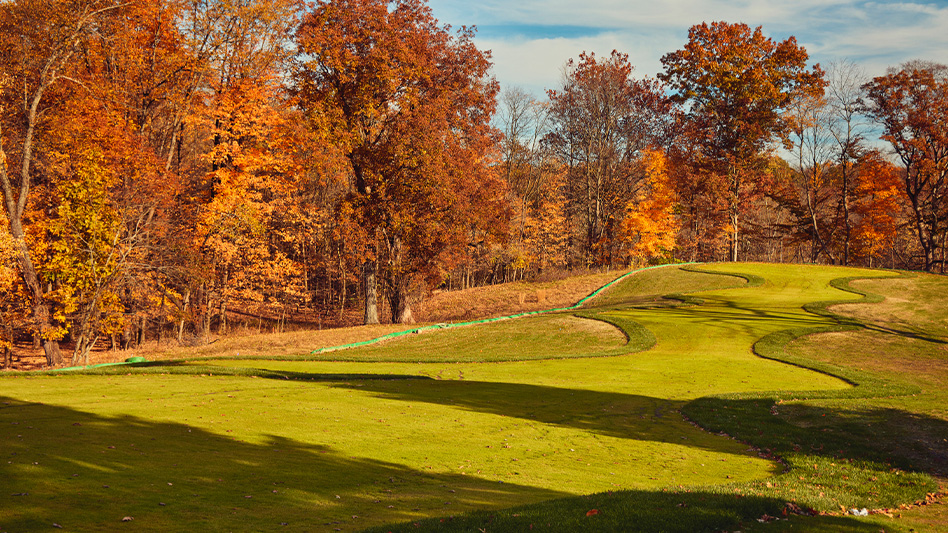
Other features found outside of the main building include four 600-square-foot greenhouses with nursery and three par-3 golf holes.
Ashley Kloes, a research coordinator at Davey Institute, says the greenhouses will help employees conduct research on live plant specimens in late fall and early spring.
“We’re going to be able to have some live plant specimens for our teaching classes that we do all year round, especially in winter,” Kloes says.
The ability to focus on smaller quantities of specimens and isolate factors like the weather while researching will also change what resources they have available during classes, like the month-long Davey Institute of Tree Sciences in February.
“We’ll have things like different species of turf, different species of pollinating plants,” Kloes adds. “We can have some live insects, like greenhouses get pests, so, we’ll be able to bring those into the classrooms, so students can actually seem them instead of just looking at a picture or video.”
Since Davey Tree helps maintain courses in Florida and Michigan, the campus functions as a place for teaching, research and recreation, says Zane Raudenbush, manager of research operations at Davey Institute.
Educating employees can include letting them use equipment, troubleshooting, conducting diagnostics and learning sustainable maintenance practices.
The company created those three golf holes to research greens practices requiring less water, fertilizer and other products. To accomplish the goal, Davey Tree is using 007XL bentgrass for putting greens and Dominant X-treme 7 creeping bentgrass on the tees and fairways, Raudenbush says.
“We think that’s gonna give us a showcase piece to demonstrate that you can still have these nice playing surfaces and use a lot less resources.”
Jill Rebuck / Davey Tree
Employees are also encouraged to play the holes for recreation.
In partnership with Ohio State University, the company is researching agrivoltaics, growing food, porridge and crops under solar panels. The facility is home to around two acres of panels, producing about 760 kilowatts, Raudenbush says.
Another current Davey Tree project is understanding how grasses like alfa and clover grow in low-light, high-heat environments, like solar panels.
“Because that is a challenge, controlling weeds, keeping them within a certain height, they can get out of compliance,” Raudenbush says. “So, we’re very interested on the kind of establishment and long-term maintenance at Davey.”
Following the completion of its SEED Campus, Davey Tree is now aiming to earn a Leadership in Energy and Environmental Design for the building with the inclusion of sustainable features.
These features include rain chains, repurposed wooden tables and stairs, and EV charging. As Rebuck says, “sustainability and a lot of environmental pieces are at play here.”
Adriana Gasiewski is Golf Course Industry’s summer editorial assistant.
Latest from Golf Course Industry
- VIDEO: 'It's their livelihood'
- Reel Turf Techs: TJ Vollmar
- Bernhard and Company names G.C. Duke as North American Distributor of the Year
- Course at Sewanee picks KemperSports for management
- WiTricity expands wireless charging technology
- Shining star
- SiteOne Landscape Supply acquires Reinders
- Talking Turf Weeds 17: Waking up your course after winter with Yusif Jaouni and Matt Herrmann