Indiana Athletics (2)
Editor's note: This column was first published on Saturday, Jan. 17, two days before Indiana defeated Miami to win the College Football Playoff.
People who seek or land new jobs make innumerable promises about outworking others, rewiring a culture and elevating standards. In interviews and on first days, they blend one-liners from self-help books and motivational podcasts like a fitness freak mixes protein powders into a smoothie.
Results rarely match the promises made during the opening act. Receipts of those unfulfilled promises, especially in a high-profile occupation like football coaching, produce comical fodder.
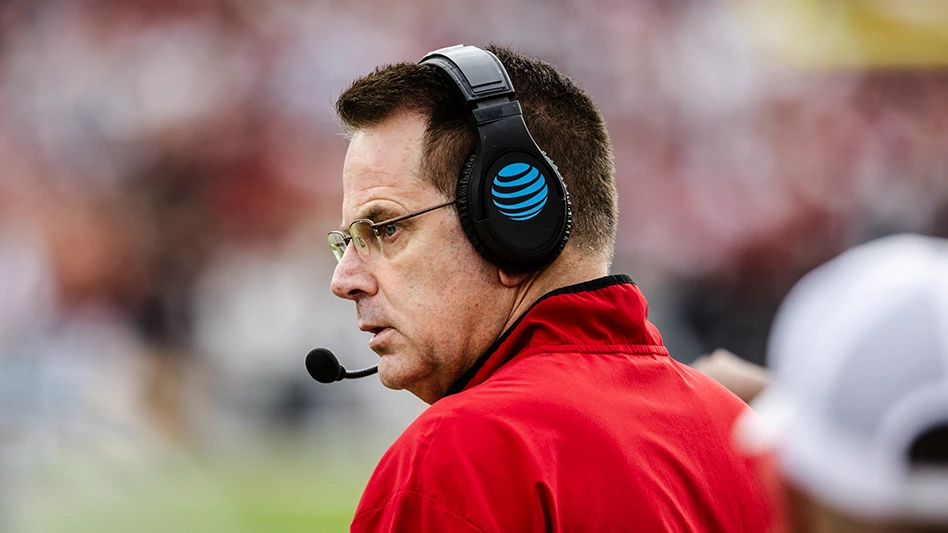
With an intense gaze, concise words and forceful hand movements, Curt Cignetti outlined his plan for Indiana University football at an introductory news conference on Dec. 1, 2023. Cignetti was taking over a football program that resembled a golf course with spongy greens, rock-filled bunkers, bare tee boxes and apathetic stakeholders. Nobody had lost more games in college football history than Indiana.
At 62 years old, Cignetti held a nice gig as head coach at James Madison, a pleasant Virginia school in the mountainous shadows of Shenandoah National Park. His teams weren’t forced to compete against Michigan, Ohio State, Oregon and Penn State. They filled James Madison’s 24,877-seat Bridgeforth Stadium. At Indiana, 24,877 was considered an acceptable crowd — in a 53,524-seat stadium. Dozens of large fraternity and sorority houses lurk within walking distance of where the Hoosiers play. On football Saturdays, thousands of fraternity brothers and sorority sisters stayed home.
Indiana is a sudden football power. The 15-0 Hoosiers face Miami in the College Football Playoff title game on Monday. Cignetti has won 26 games in two seasons at Indiana, which won just 23 games in the five seasons prior to his arrival.
Cignetti delivered on hiring promises to unimaginable levels. How it happened will be the subject of leadership books and documentaries.
Golf industry leaders and managers can learn from elements of the secret smoothie Cignetti revealed on Dec. 1, 2023. Video from his introductory news conference can be found on YouTube. We skipped the opening pomp and went straight to Cignetti’s words.
You’re never too old to grow
A coach’s son from western Pennsylvania, Cignetti told reporters and administrators he possessed one hobby outside of his family: football. Chatter about being a balanced individual permeates society. But Cignetti proves there’s still a single-minded segment of the workforce experiencing major success. Internal drive and zest for his profession convinced Cignetti to accept an enormous challenge at an age when others plot retirement.
“It’s a challenge that really got my juices flowing,” he said. “I left a great job that I could have retired in with a contract through 2030 and won a lot of football games. But sometimes you have to make hard decisions in life. This was a hard decision for me because you have to be uncomfortable to grow — and I’m too young to stop growing.”
If your mind and body remain fit, it’s OK to keep working, especially if it’s a passion-based career like football … or golf. Balance should be in the eye of the beholder, not perceived societal norms or self-help trends.
Patience and mentors
Cignetti was in his mid-40s and had failed to become a head coach despite familial industry connections. In 2007, he made a seemingly lateral move, leaving an assistant coaching position at NC State to guide wide receivers and coordinate recruiting for first-year coach Nick Saban at rebuilding Alabama. Saban had a pedigree as a national-championship coach at LSU and left the Miami Dolphins for the Crimson Tide. “I learned more from him in Year 1 about how to lead and run a program than in the previous 27,” Cignetti said.
Cignetti left Saban’s staff to become the head coach at Division II Indiana University of Pennsylvania in 2010. He was prepared to flourish at IUP, then landed the head job at Elon and won enough at Elon to reach James Madison. His path proves sometimes you must toil in a demanding industry, learn from the best and demonstrate career patience.
The golf industry is filled with Saban-like mentors. Seeking a position under one regardless of age can reap a significant reward.
Show your stakeholders
Indiana’s administrators and vast alumni network made significant financial commitments to Cignetti and his staff and roster only after positive results were achieved. Indiana hired Cignetti for less than $5 million, which ranked near the bottom of Power 4 head coaching salaries. The contract was reworked following a 10-0 start in 2024. Cignetti earned another giant raise midway through this season.
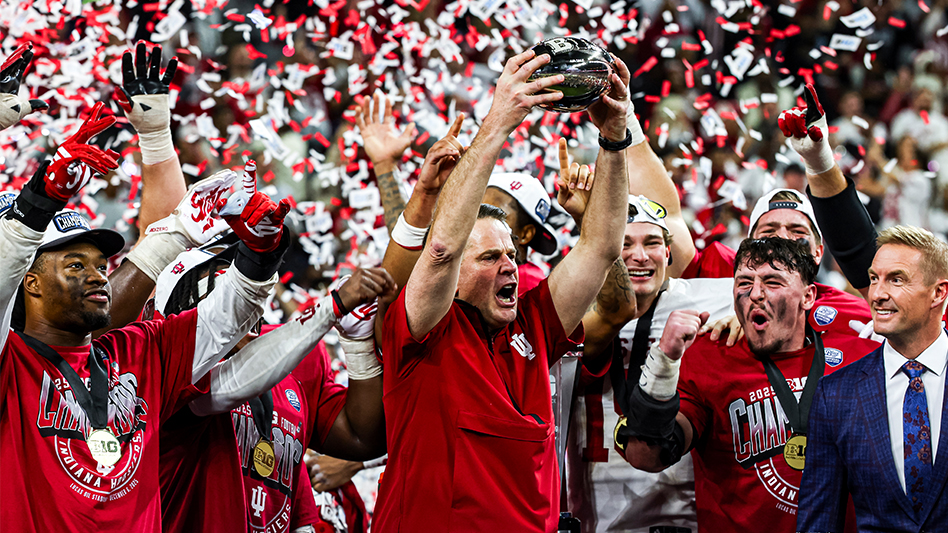
His top assistants, defensive coordinator Bryant Haines and offensive coordinator Mike Shanahan, are generously paid and receive autonomy to lead their units. Both coordinators have worked with Cignetti since his Elon tenure, and they avoided being distracted by the pull of head-coaching jobs during this past hiring cycle. The defensive and offensive focus contrasted Oregon’s in the Peach Bowl, a College Football Playoff semifinal game Indiana won 56-22. Both of Oregon’s coordinators were juggling preparing for an elite team with handling new head-coaching jobs.
The more Indiana wins, the more donors and alums funnel into its NIL fund. The Hoosiers will have one of the sport’s best-funded rosters in 2026.
People find money for winners. This applies to a golf course. Showing stakeholders, golfers and members a better product almost always leads to receiving more resources to further enhance the product.
Instead of fretting about NIL like many coaches of his generation, Cignetti is pragmatic about allocating money to assembling a roster.
“Use it as smart and efficiently as possible,” he said. “It’s mathematics. Here’s what you got, you rank your team, here are our best players, this is what that guy should get, that’s what this guy should get. You lose a guy, OK, you got a little more, you lose a guy, you go get a guy. It’s really not that hard.”
Managing a golf course maintenance budget is also mathematics. Embracing the financial part of the job isn’t optional. It’s a huge prerequisite for success.
Complacency sucks
Some of the most viral moments of Indiana’s 2025 season involve Cignetti scowling and shouting while holding five-, six- and seven-touchdown leads late in games. The scowls and shouts shouldn’t surprise anybody studying his first public statements as Indiana coach.
“It’s wanting to be great versus wanting to be normal,” he said. “Normal kind of equals average, and average is OK. There’s no problem with average — except in my business. Average is the enemy.”
For somebody in the golf industry, it’s OK to find faults when the course shines on terrific weather days. Unwavering focus toward impeccable execution will help when lapses in judgment during unforgiving weather could damage a course and reputations.
Guy Cipriano is Golf Course Industry’s publisher + editor-in-chief. Yes, he’s an Indiana University alum. No, he didn’t care much about the school’s football team until recently.
Latest from Golf Course Industry
- Kevin Hammer elected 68th USGA president
- Moghu USA bolsters PoaCure SC reach and technical support
- VIDEO: Guardians of the Game
- Modernized Golf Cart Charging with Starline Busway
- Finally back to the Buckeye State
- From the publisher’s pen: Golfdar triggered
- Total Turf Golf Services hires Appel
- VIDEO: Perfect storm