No matter what part of the country your course is located, climate change has been the subject of substantial discussion. It’s widely agreed some change is inevitable, which means the industry needs to plan to take these changes into account, not only for the viability of courses, but for the creation of new courses, too. The following are topics of concern based on potential climate change legislation and executive orders.
Impact from actual change in climate
1. Impact on days for play
Weather patterns in your area may change. If you don’t depend on greens fees from nonlocals, your only concern is the number of playing days and times increasing or decreasing, and whether your revenue will increase or decrease accordingly.
However, if your club is a destination, additional or fewer playing days, as well as the locations from which you draw, may change. If your club is a vacation destination, the seasonal nature of the travel (holidays, summers, etc.) may alter the patterns of travel to your course.
2. Impacts on turf, trees and landscape
Course upkeep and maintenance may become an increasing challenge. When weather patterns change, it may become necessary to find drought-resistant grass and vegetation or those that thrive in wetter conditions.
3. Water supply
Water supply issues come with climate change. Some areas may be in desperate need of water, and others may experience flood conditions never before seen. Where there’s a lack of water, course managers may have to consider more drought-resistant turf and vegetation and alter maintenance practices. Where rain increases, course operators may have to be more concerned about runoff, ensuring it’s channeled correctly and they’ve obtained the appropriate federal and state permits.
There likely will be increasing water conservation concerns, too. Water use on courses may be restricted based on a use/benefit allocation, and the use of recycled water will be emphasized for course irrigation. Such water use may require separate nonpotable water systems be installed. More critically, its use may be mandated, which often comes with numerous permit and other regulatory requirements.
Impact of regulations
1. Vehicle miles traveled
One of the key issues when building new courses and with the continued use of existing courses is the reduction of vehicle miles traveled to and from the course. The goal of regulation is to reduce mileage to reduce carbon emissions resulting from transportation. Obviously, if you’re contemplating constructing a new course or renovating an existing one, the permitting process may include travel concerns. You may have to provide traffic congestion and avoidance studies and reports and validate and justify the amount of travel your players will be making. You may also be required to advance methods of reducing carbon emissions to an acceptable level. For an existing course, you may be required to do the same as a matter of overall local or regional planning for emissions reduction.
Looking at methods to reduce carbon emissions may relate to location of facilities, i.e. closer to established home developments, but also could include such things as discounts for those taking public transportation, car pooling or using hybrids or other fuel-efficient vehicles. You may have to establish remote parking, closer to main transportation corridors and shuttle players to and from your course in low-emission or zero-emission vehicles.
2. Green buildings
Facilities such as clubhouses may have to meet energy efficiency levels they were not likely designed to meet. It’s likely new construction will be held to these types of standards, and regulation may require renovations to meet these standards, too. Look for your state or local government to amend its building codes to include these efficiencies.
There are a number of green building rating systems, the leader being the Leadership in Energy and Environmental Design or LEED program (http://www.usgbc.org/). The LEED Green Building Rating System is a third-party certification program and the nationally accepted benchmark for the design, construction and operation of green buildings.
As an example, your facility may have to change its heating and cooling systems, use double pain glass, alter insulation, change entrance and exit structures and locations, etc. Those are the easy things, but you may find your state and local governments mandate more difficult aspects of the LEED programs that deal with being more self-sustaining and carbon neutral goals. Regardless, none of these changes will be inexpensive.
3. Greens/grounds maintenance
Presently, golf course maintenance relies on the use of chemical fertilizers and pesticides as well as natural and artificial nutrients and amendments. In the future, some may be replaced by “greener” alternatives. There will be a cost differential brought on by the need to use more (or less) per acre of the material, but likely there will be a higher cost per acre as new materials are made available using less carbon-intensive processes.
Most courses also have a significant investment in grounds maintenance equipment. These are almost entirely internal combustion powered, and therefore, add to greenhouse gas emissions. There may be changes in emissions requirements, and it may become necessary to shift to newer, less polluting equipment. Small engine equipment, which has a reputation for creating emissions, also may come under fire. Considering that grounds maintenance is almost continuous, there may be a cut back in hours that such equipment is used to reduce the facility’s carbon footprint.
4. Power consumption
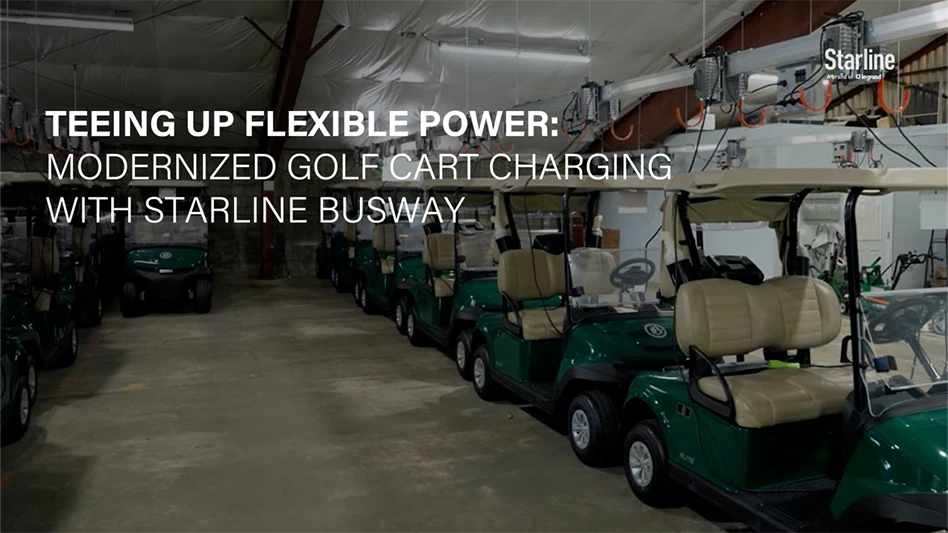
Generally, a course’s per acre power consumption is fairly low because of the large amount of open space that is not consuming power. However, the need to reduce consumption will be a mandatory hallmark of regulation. Aside from consumption in buildings such as clubhouses, the biggest power consumers at a course are lighting and golf cart recharging. The former is easier to approach by using more efficient bulbs, relocating lighting to lessen the number of lights needed and curtailing lights when there is no need for them other than truly aesthetic reasons. The latter is more difficult because it will require review of two separate issues. The first is the carts. Now using deep recharged 12-volt batteries, carts require a good deal of energy to prepare them for a full day’s use. These fleets may be replaced with carts using batteries that take less power to charge and hold that charge longer.
Secondly, the efficiency of solar panels is increasing and the prices are decreasing. A wise course would review the ability to use solar panels to generate electricity needed for the carts. Tax incentives may be available. Plus, the energy that’s not being used for charging carts could be used for supplying power to the clubhouse or selling it back to the grid.
Possible positive impacts
1. Carbon sequestration
Living plants help rid the atmosphere of carbon dioxide by capturing carbon dioxide through photosynthesis and sequestering some of it in the soil. Repairing the soil’s ability to retain carbon dioxide and replanting with turfgrass that’s better able to photosynthesize carbon dioxide (as they become available) may be necessary and/or prudent. There are several efforts being made to measure the sequestration and photosynthesizing ability of a course to aid in reducing the impact of greenhouse gas emissions.
2. Offsets
Greens, fairways and other vegetation could be used as an offset against the other issues of the course, like creating emissions. What’s saved or mitigated on one part of the facility could be used to off set the impact on another part of the facility. These issues are being looked into and in the near future, a computer model will be able to determine the savings. Further, the methods by which the savings can be verified and used as an offset will be set forth in regulations that should standardize this aspect of climate change. GCI
Steven Hoch is a managing partner of Brownstein Hyatt Farber Schreck’s Los Angeles office (http://www.bhfs.com/People/shoch). He can be reached at 805-882-1485.