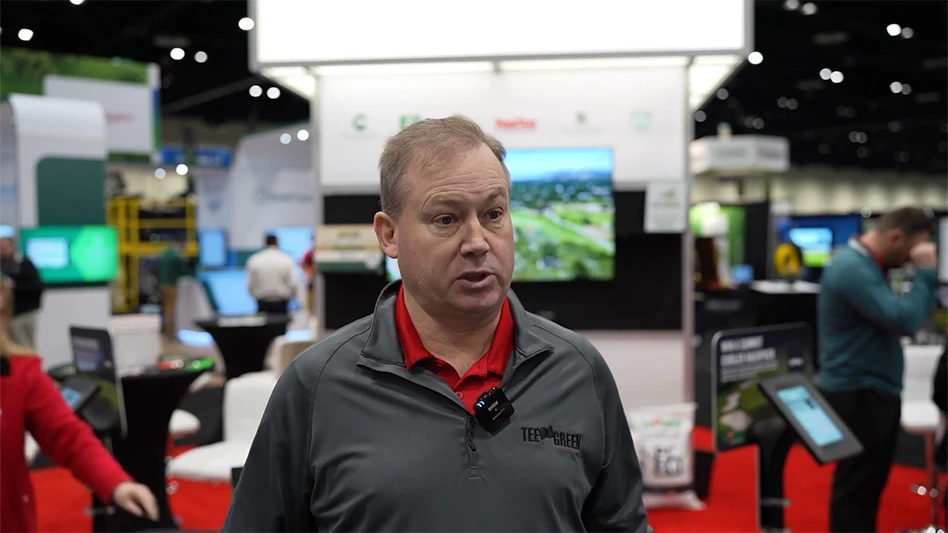
Orlando, Fla. - Karl Danneberger of Ohio State University and Joe DiPaola of Syngenta Professional Products co-led a turfgrass stress management seminar at the 2005 GCSAA Educational Conference held in conjunction with the inaugural Golf Industry Show. Canopy temperature was one the many topics discussed in their seminar.
Danneberger and DiPaola said that with clear, calm conditions, if the air temperature is 90 degrees and the soil temperature is 70 degrees, the temperature of the canopy is 105 degrees. They said canopy temperature with cool-season grasses is higher than one might think. The canopy acts like a greenhouse effect and is usually 15 degrees warmer than the air temperature. With a 5-mph wind, the canopy temperature drops 15 degrees. In cloudy, calm conditions, the canopy temperature will be the same as air temperature.
Danneberger said grass type and height of cut don’t impact canopy temperature that much.
Good moisture and air movement helps reduce turfgrass stress and improves canopy temperature, which, if is too high, puts stress on the turf.
The practice of syringing can help reduce this stress and has several benefits. It can:
-- Prevent wilt;
-- Reduce transpiration;
-- Cool turf;
-- Remove frost and dew; and
-- Be used to treat localized dry spot.
Syringing reduces canopy temperature. However, just because it’s hot outside and one applies water to the turf doesn’t mean the turf will cool. Danneberger said the energy transfer or latent heat transfer from the leaf cools he plant, not watering it. Also, he said that after five minutes using hot or cold water doesn’t matter when trying to cooling the canopy temperature.
DiPaola and Danneberger said syringing is most effective when:
· the air temperature is higher than 90 degrees;
· it’s sunny, there’s low humidity and it’s a clam day;
· there are moisture deficits in the soil;
· there’s a restricted root system; and
· it’s done to cool-season grasses.