Courtesy of John Ball (3)
While driving by Portland’s Eastmoreland Golf Course’s 13th hole with USGA Green Section agronomist Corey Isom, maintenance supervisor John Ball pondered the best way to maintain the gully.
With water springs at the bottom and trees and foliage surroundings, the area proved to be a pain. But Isom had a baa-rilliant idea: ‘What about goats?’
“I thought it was genius,” Ball says. “I said, ‘I got to try this out or at least look into it.”
Ball did his research and contacted Go Goat: Oregon, a goat rental company for customers needing foliage removed in a sustainable way. Ball was able to get the goats out on the course to work for three weeks and plans to bring them back next year to finish the job, as it typically takes more than one season for them to clear an area. Eastmoreland, a municipal course, is one of four Portland Parks golf courses, and Ball intends to encourage the other courses to hire the goats for environmentally sensitive areas. The four courses, Eastmoreland, Heron Lake, Rose City and Colwood, host more than 330,000 rounds each year.
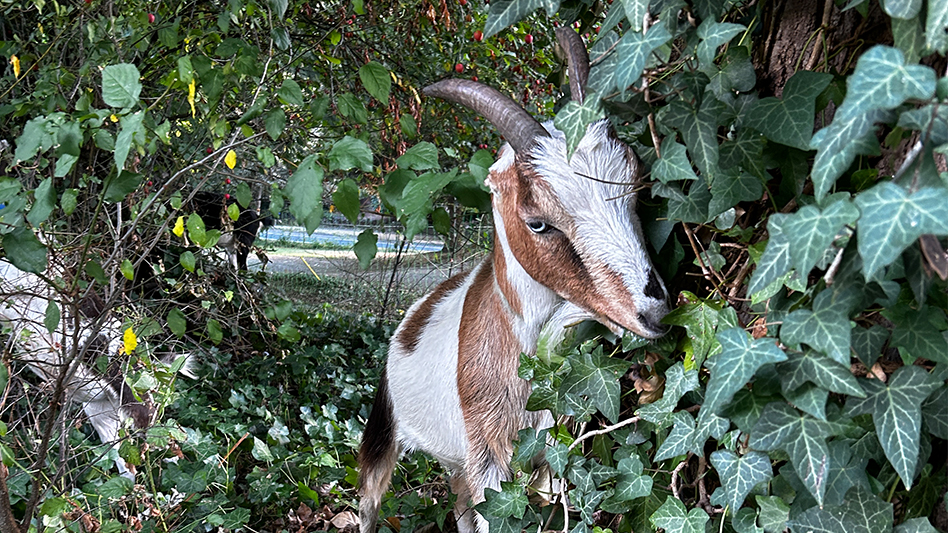
The goats, enclosed with fencing for protection, will help clear mainly blackberry infestation and English ivy, as well as other unwanted vegetation. “Their goal is to mostly defoliate undesirable vegetation in the gully so that we can get in, access and assess the area and do any necessary tree work to keep the flyway open for golfers,” Ball says.
Ten goats, including Pip, Zip, Sunny D and Benny, and one llama, are eating their way through the gully. Dewey, the llama, has the main role of protecting the goats. Llamas have a “strong predator drive” and will go after any unwanted friends such as coyotes or wolves. “He also eats the same food that the goats do, so he’s munching along at the same time,” Ball adds.
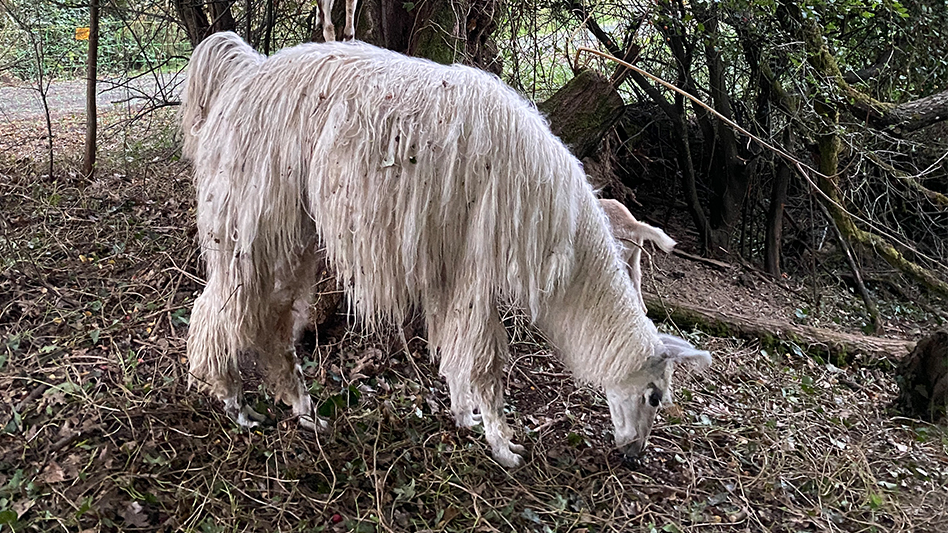
The animals prevent Ball and his staff from using herbicides to prevent blackberry infestation and ivy growth, in turn being more environmentally friendly. A large part of Portland golf’s mission is conservation and eco-friendliness, so the goats will continue to lead them down that path. “This just fits right in with what we're trying to do,” Ball says.
For Ball, working with livestock isn’t something he is used to. The Washington State University graduate didn’t grow up working with animals, so watching the goats interact and work has been a learning experience. “It's interesting to watch them,” Ball says, “because when they come into the area, first they eat all of their favorite food, and then they slowly transition to their less favorite foods.”
If you’re looking to do something similar, Ball suggests pricing it out. “It's not for every situation,” he says, “but if it looks like it might make sense, then the price is right.” For Ball, the feedback from the public while promoting the golf course for environmental stewardship has made it worth every penny.
Kelsie Horner is Golf Course Industry’s assistant editor. To submit conservation efforts, email Kelsie at khorner@gie.net.
Latest from Golf Course Industry
- Tartan Talks 116: Doug Smith
- Audubon International adds 127 golf courses to Monarchs in the Rough
- USGA’s GAP preps for fourth year
- Protect your vehicles from rodent damage
- VIDEO: Fun with fairways
- From the publisher’s pen: Humble giving
- Syngenta adds two to western U.S. team
- The Aquatrols Company introduces soil surfactant for Canada