Officials with the Colorado city of Fort Lupton say they are waiting for a final work-out proposal from U.S. Bank, the trustee who represents investors who hold $5.3 million of defaulted revenue warrants issued to finance a city-owned golf course.
"We are told that a warrant-holder committee has been formed to assist the trustee with a possible workout plan," Fort Lupton finance director Wes LaVanchy said.
LaVancy said that the trustee has indicated to him that there are two main players who hold most of the debt. However, a trader who sold some of the $5.9 million of non-rated warrants when they were originally offered said that there were a number of retail investors who also hold warrants issued in 1996 by Fort Lupton Golf Course Enterprise.
The enterprise is a division of the city, and the city council approved the sale of the warrants.
"The possibilities being offered by the committee seem to run the whole gamut," LaVanchy said, referring to a letter he recently received from the trustee. "They include everything from recommending higher fees for the golf course to discussions about actually taking over the management of the golf course."
The golf course continues to flounder financially, meaning that it's unlikely the facility will be able to play "catch-up" with investors under the deal's existing structure.
"It's not in good financial shape," LaVanchy said. "Currently, the course is showing a $68,000 year-to-date loss, and it's $100,000 short of its projected revenues for this point in the year."
The warrants first fell into technical default in 1998. Investors last received a payment in December 2001, and the bonds defaulted in July 2002.
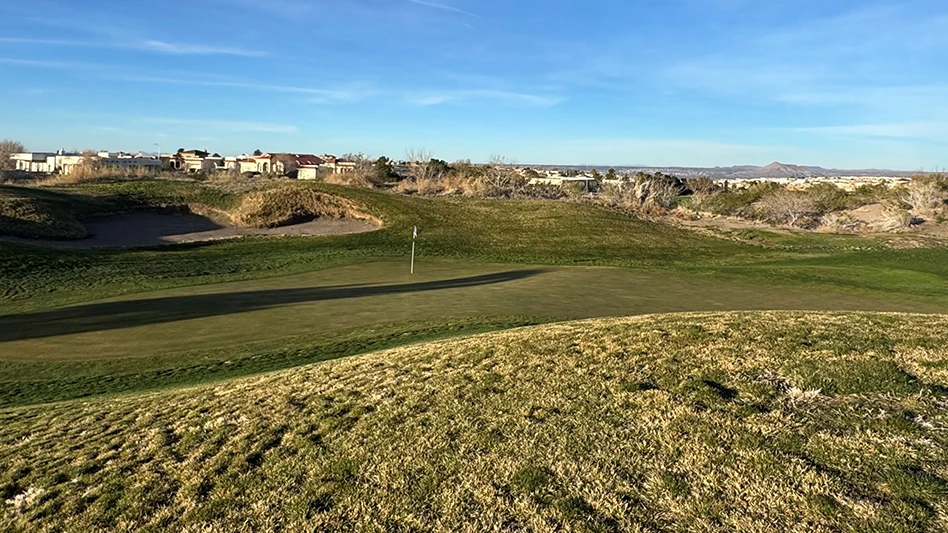
Proceeds from the sale of the warrants financed a golf course in the northwest Denver suburb. That golf course was built as an incentive to prospective homebuyers in a residential development being promoted by Matrix Development, a division of Matrix Bank.
"They aren't selling a lot of property in the development," LaVanchy said.
The original debt issuance included $600,000 Series 1996A senior-term warrants with a final Dec. 15, 2004 final maturity priced to yield 7.4% and $200,000 of subordinate Series 1996A1 warrants that were priced to yield 12.75% due Dec. 15, 2015.
The deal also included $800,000 of Series 1996A1 warrants with a 2015 maturity that carried coupon rates of 5% and $300,000 of Series 1996B subordinate warrants with a 2015 maturity and a yield of 9.75%. There also were $4 million subordinated Series A warrants due in 2015 yielding 8.5%.
Matrix Development purchased all of the Series 1996A1 warrants. A provision in the bond covenant gave ownership of the golf course to the holders of that bloc of warrants.
Debt service for the warrants was meant to come from revenue generated by the golf course and from fees paid by buyers of each house in the Matrix-owned residential development.
When the warrants first fell into technical default in 1998, city officials stepped in and purchased the Series 1996A1 term warrants from Matrix. That transferred ownership of the golf course from Matrix to the city.
Those warrants are now in the hands of the city's utility enterprise zone. City officials in 2003 classified the purchase of the subordinate debt as "an investment for the utility enterprise zone, not a take-out" of the debt.
Some holders of the defaulted senior debt, however, have expressed outrage at the purchase of the subordinate debt by the city. They maintain that the city knocked senior warrant-holders out of the way, paying the minimum amount required to take over the golf course with no regard for the senior investors.
RAF Financial Corp. was the underwriter for the debt. Becker Stowe Bowles & Lynch was the bond counsel for the deal.
"As I understand it, the two main bondholders are in different minds about how to proceed," said LaVancy. "One group is saying take the course over. The other is saying, 'be careful what you ask for, because you might get it.' "
Source: The Bond Buyer