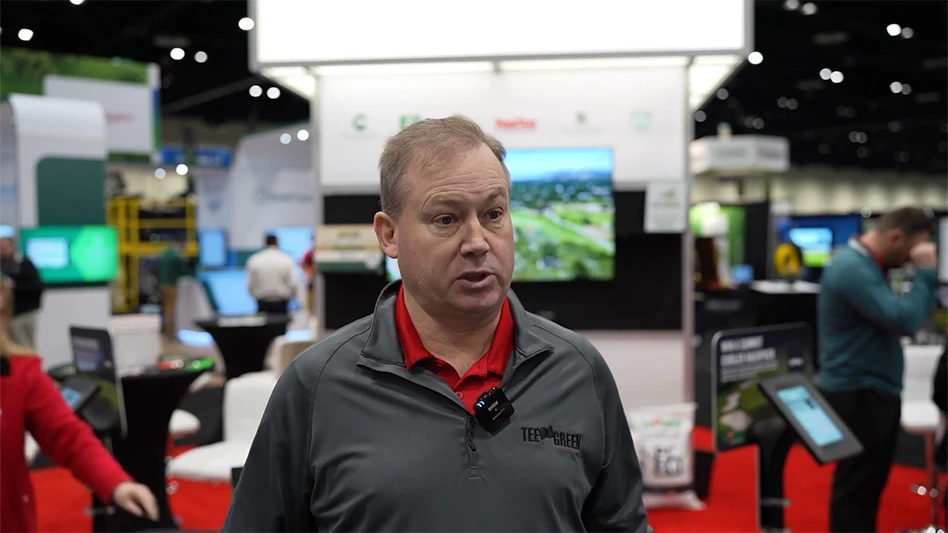
Bud White has learned plenty during his more than four decades deep in the turf industry: What you need to develop the ability to think critically through problems and how to solve them. How to evaluate products and separate testimonials from research. So many little things that trip up rubes and sage veterans alike.
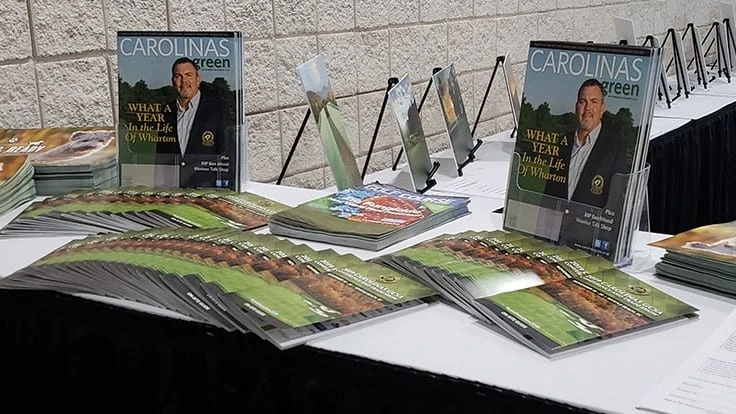
White shared as many tips, tricks and lessons both general and specific as he could squeeze into three hours and change Monday afternoon during the first round of seminars at the Carolinas GCSA Conference and Show in Myrtle Beach, South Carolina — so many, in fact, that he nearly talked right through a scheduled halftime refreshment break. “Oh, right,” he said. “Be back in about 15 minutes. We’ll pick up right where we left off.”
A Greensboro, North Carolina native, White designed his seminar for younger turfheads — “Fast Lane Learning for Assistant Superintendents” is what the program promoted, though White opted for “10 Years in an Afternoon?” on his title card — and 26 of them packed the conference room. “These are the kinds of things that give the most people the most problems in my experience,” said White, who was a member of the USGA Green Section for 22 years and more recently moved to Arnold Palmer Golf Management, where he’s senior vice president for Century Golf Partners.
White dived deep into irrigation and how important effluent water will be in the years and decades to come. He dished on the importance of testing bagged sand, even the most expensive options — especially the most expensive options — whose only guarantees are being dry and being expensive.
He shared some course stories, too.
Not too many summers ago, White was visiting perhaps the most famous club in Oklahoma. An octet of interns, none of whom had ever planted Bermudagrass, were shaking seed in hundred-plus-degree heat. The turf was far warmer, needling 140 on thermometers. White returned to his car, switched into some work clothes he always travels with, and got out on the greens. “If you’re not careful,” he told the interns, “you can have a tough planting situation.”
Some time before that, White was at an unnamed club where one wealthy member loved trees enough to gift $150,000 — if the club matched that total. Nearly a third of a million dollars later, the course superintendent was out planting dozens of new trees, many of them 15, 18, even 20 feet tall. What made that project easy — or at least easier — was the previous development of a master plan that laid out what sort of trees were best in different areas around the course and detailed soil components and root systems.
White recalled the old Donald Ross axiom that any tree is too close if it can fall on a green. “That’s not a bad rule of thumb if you think about it,” he said.
Another course in South Carolina called in White on a May afternoon years and years back and the greens committee chairman asked him about shade. White offered not his opinion but the facts that trees surrounding various greens were too close and provided far too much shade. About a quarter of the green was covered. White suggested some thickets be thinned. “That’s a load of crap,” White said the chairman told him in front of about 15 people. “You Green Section folks just want to make the superintendent look good.”
White snapped a photograph of the green at that moment and said he would return in eight months. The January shade, he said, would prove his point. Here, back in the moment, White clicked to the next slide in his seminar and showed off that January photo. Nearly the entire green was covered with afternoon shade.
“I think I owe you an apology,” White said the chairman told him during that second visit.
“Buy me a cheeseburger,” White told him, “and we’ll call it square.”
Three weeks later, a tornado whipped through the course and pulled out more than three times as many trees as White had suggested for removal. “The worst thing you can do is cut a tree down and leave the stump,” White said. “If you grind up the stump and sod it over, nobody will ever remember that tree was there.”
Mother Nature ruled that day and plenty of others. White never did confirm whether he cashed in that burger apology.