Poppy Ridge
Poppy Ridge Golf Course — one of two courses owned and operated by the Northern California Golf Association — will reopen May 31 following a 13-month construction and grow-in process guided by architect Jay Blasi.
The NCGA’s other property is Poppy Hills Golf Course in Pebble Beach.
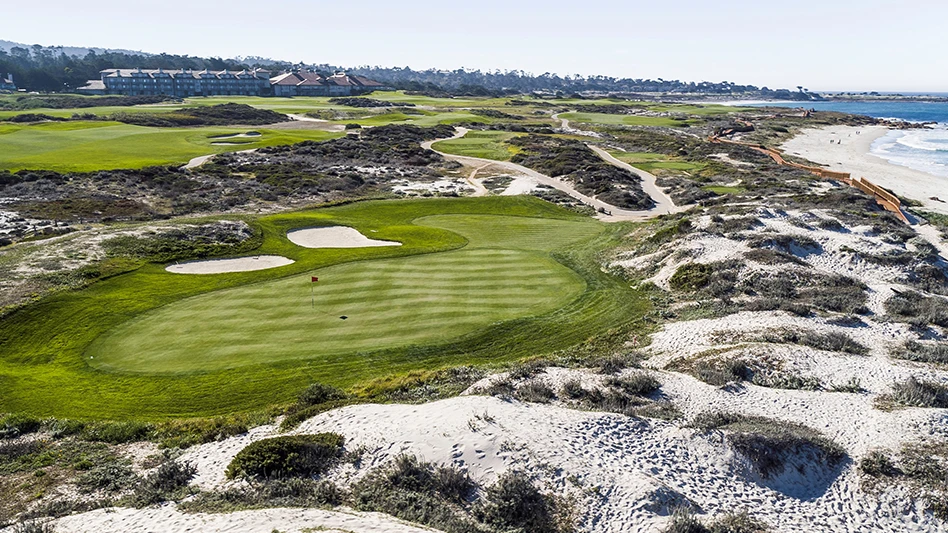
Under Blasi’s direction, a new 18-hole Poppy Ridge course was created that takes advantage of the rolling landscape and long-distance views. Key to the project was creating a venue that would challenge the world’s best golfers while being enjoyable for players of all abilities. The NGCA has more than 220,000 members who can play Poppy Ridge at significantly reduced rates as a benefit of membership.
“The new 18-hole golf course has been re-imagined,” Blasi said. “It is completely different from the old concept, so it’s a new and thrilling experience for all. I would suspect that first-timers are taken by the beauty of the site and the surrounding vistas, and that they appreciate how the golf course fits the landscape. For regulars who played Poppy Ridge many times before the project, I would hope that they appreciate the newfound walkability, playability and variety of the layout.”
Every aspect of the course was subject to change, from all-new turf to state-of-the-art infrastructure.
Turf
Tees, fairways and green surrounds feature Santa Ana Bermuda, a warm-weather turf that requires less water than the old, cool-season grass and offers excellent playability year-round. The new greens are Prestige Bentgrass, which can be maintained at lower heights.
Fairways
“Given the windy nature of the site and the dramatic elevation changes, the fairways are quite wide,” Blasi said. Most range from 40 to 60 yards, with some spots as wide as 100 yards. “Keeping them wide allows the everyday player to get around, but at the same time, there is lots of contour that the best players will need to assess and attack strategically.”
Bunkers
The large, bold scale of the site allows for many bunkers to sit in hillsides and serve as transitions from one landscape to another. The bunkers also were designed to match the shot being played, with a lower lip if a middle or long iron is necessary to get out; a higher lip greenside where a wedge is necessary. A custom blend of sand was used to provide playability, drainage and a natural color that presents an aesthetic contrast.
Greens
Like the bunkers, the greens were formed to match the setting and the shot, resulting in a wide variety of shapes and sizes. Greens meant to be hit with a short iron likely are smaller, and/or offer more movement; greens likely to receive a longer approach shot will be bigger and/or feature surrounding slopes to help feed the ball toward the surface.
Walkability
The original Poppy Ridge was not walkable for most people, with long distances between greens and tees and many steep grades. The new 18-hole course features shorter walks between holes and smoother transitions across the varying landscapes. “If you normally play the course around 6,500 yards,” Blasi said, “the walk will now be about 2,000 yards shorter with around 400 feet less overall elevation change than what it used to be.”
Along with the new 18-hole course, Poppy Ridge has a newly renovated practice facility and short game area. It features a 1.25-acre natural-grass hitting area, a chipping/pitching green with two practice bunkers, a 17,000-square-foot putting green and numerous practice targets.
The site also features a shorter nine-hole course, named “The Ridge 9.” The par-34 course is primarily comprised of holes from the original Merlot layout, with selected new golf course features, and sits high on the property. The Ridge 9 plays from 1,950 to 3,000 yards.
Latest from Golf Course Industry
- Tartan Talks 116: Doug Smith
- Audubon International adds 127 golf courses to Monarchs in the Rough
- USGA’s GAP preps for fourth year
- Protect your vehicles from rodent damage
- VIDEO: Fun with fairways
- From the publisher’s pen: Humble giving
- Syngenta adds two to western U.S. team
- The Aquatrols Company introduces soil surfactant for Canada