Guy Cipriano (4)
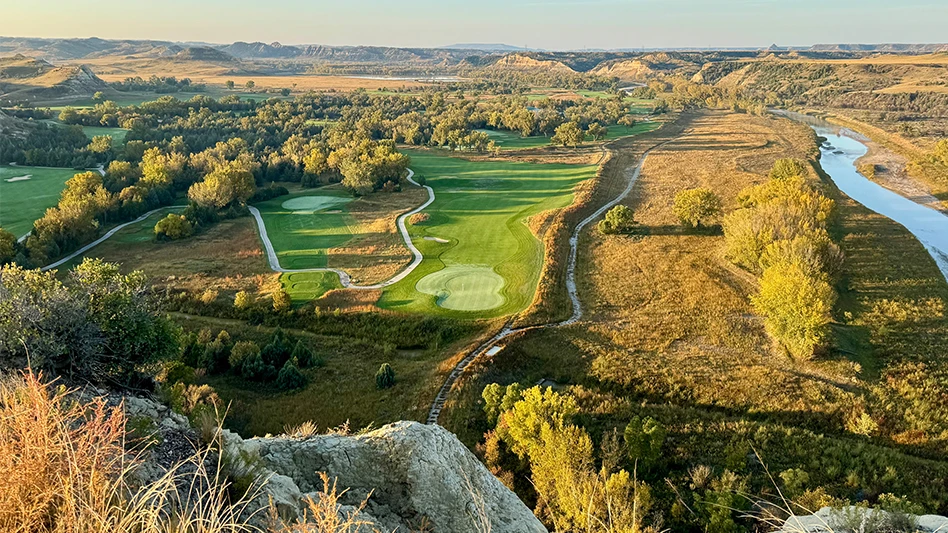
Mental notes turned into published scribbles generated from gawking at Bully Pulpit during a late-September sunrise hike on a section of the Maah Day Hey Trail in Medora, North Dakota. That sliver of the 144-mile non-motorized path was purposely selected because it boasts elevated views of the 21-year-old Michael Hurdzan design.
Unfortunately, the vacation travel schedule didn’t include time to experience Bully Pulpit from turf level.
First scribble: Labor
No matter the natural strength of a setting or the hole variety, a golf course will plunge faster than the rocks beneath a mountain goat’s hoofs if it fails to find labor.
Bully Pulpit lurks on the fringes of Theodore Roosevelt National Park. The park melds tallgrass prairie and arid terrain (Prickly pear lives in North Dakota?) among jagged peaks and colorful buttes. The Little Missouri River meanders through the park.
Theodore Roosevelt became so immersed by the scenery and seclusion of Medora and the North Dakota Badlands that he established a hunting camp in the region during the late 1880s. A zest for the Badlands contributed to Roosevelt using his presidential influence to designate millions of acres as public lands, sparking the modern conservation movement.
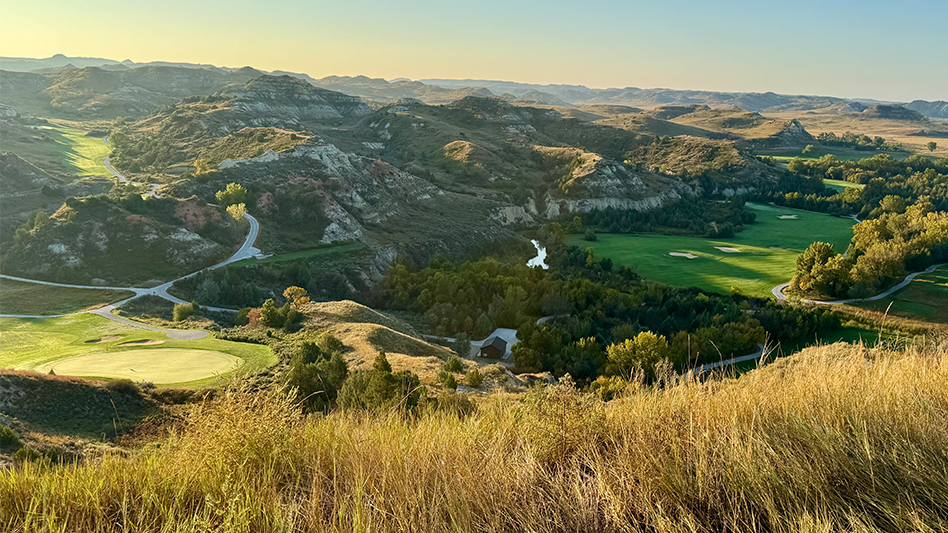
To promote tourism in western North Dakota, the nonprofit Theodore Roosevelt Medora Foundation commissioned the construction of Bully Pulpit, named for a term Roosevelt used to describe the presidency. Bully Pulpit quickly ascended to must-play status, with many golfers visiting the remote region for the sole purpose of seeing the course.
Supporting significant seasonal golf demand requires a sufficient workforce. Think your course sits in a tough location to fill a crew? Imagine what Bully Pulpit superintendent Darwin Lindsey faces when assembling a staff to support more than 17,000 annual rounds.
Medora has around 150 residents. The closest city with a significant population is Dickinson, a 25,000-resident community 37 miles to the east. Bismarck, the state capital and a 78,000-resident city, is 97 miles east of Dickinson. Rapid City, South Dakota, the epicenter of the tourism-dominated Black Hills of South Dakota, is 235 miles to the south. Billings, Montana’s largest city, is 282 miles to the west.
As I trampled on hardy trailside bluestem and scoured the Bully Pulpit morning scene with cheap binoculars purchased on Amazon, I spotted two workers mowing fairways and another employee grooming surrounds. I envied their work surroundings; I wondered how far they traveled to their jobs.
Second scribble: Passion
If you work in the golf industry, driving, hiking, biking, running or boating past a golf course should yield curiosity. If it doesn’t, you might also fail the trash test.
What’s the trash test? Early in my Golf Course Industry tenure, an ambitious assistant superintendent mentioned how a mentor ingrained in him that it’s time for another job or career if somebody in a turf management leadership position passes trash on the course without collecting it. Scurrying past trash, in his view, represented a sign of apathy and abandoned passion.
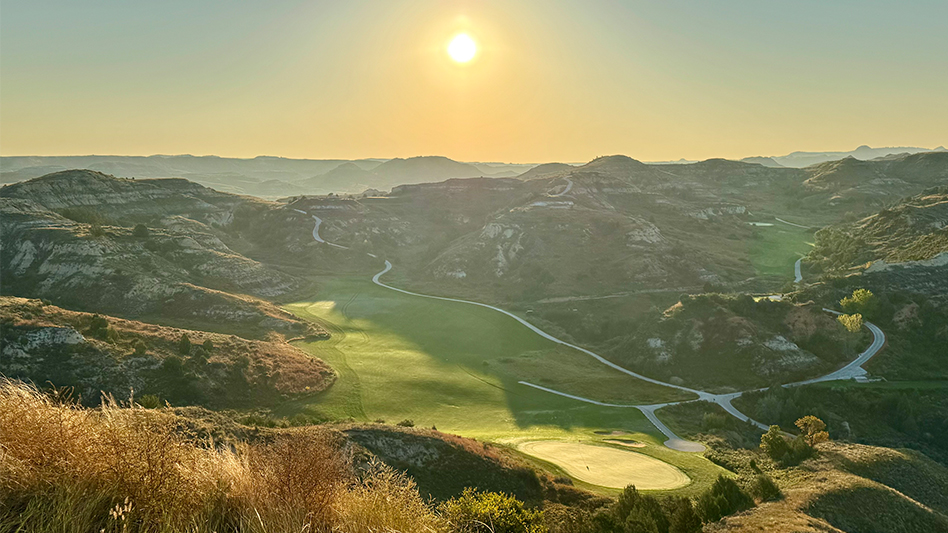
The same methodology can be applied when moving past a golf course, especially an unfamiliar one. If a few questions and observations don’t enter the mind, it might be a sign of dwindling golf and turf passion. Without passion, you’re hiking barefoot, uphill on rocky terrain in this business.
I stopped focusing on the trail and the North Dakota Badlands upon catching my first glimpse of Bully Pulpit: a green-to-tee scan of the fifth hole along the Little Missouri River. I immediately sent my wife — who was still sleeping in our North Dakota vacation rental — pictures of the course and the glorious sunrise. A few days later, I fired off social media posts about seeing Bully Pulpit from above and sent coworkers pictures of the layout. Awesome golf scenes must be shared.
Marveling at Bully Pulpit’s beauty suggests I’m covering the right industry.
Where is that ambitious assistant superintendent now? He’s the course manager at a facility with “Royal” in its title.
Third scribble: Branding and fun
The trek into Medora offered time to play Little Pulpit, the miniature golf version of Bully Pulpit. Situated below a hiking trail in Medora’s western-themed downtown, Little Pulpit blends local history with family focused entertainment.
Every hole honors a nuance that makes Medora special, including geology, Native American history, Roosevelt’s legacy, bison and, yes, Bully Pulpit. The front nine borders a swimming pool and motel. Putters cross Sixth Street to play a back nine constructed into a hillside.
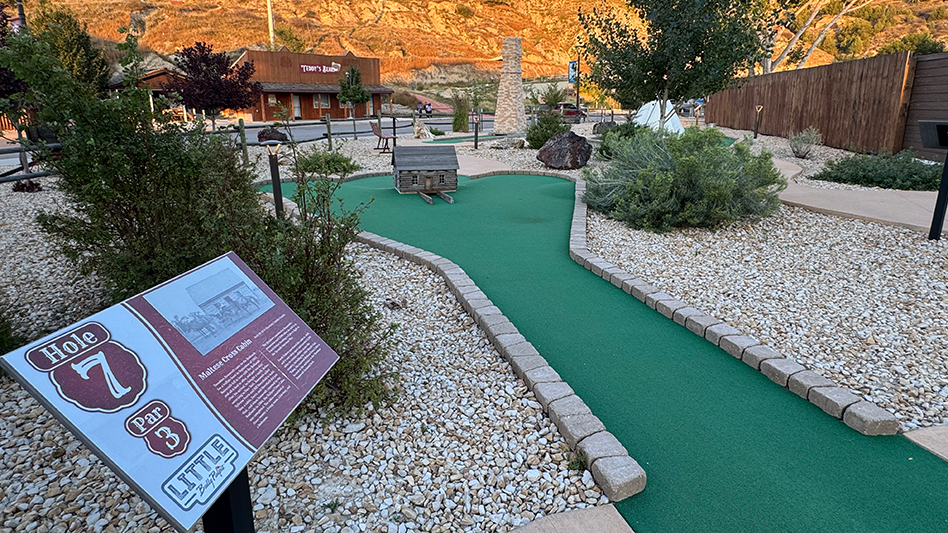
Experiencing Little Pulpit and studying Bully Pulpit yielded one simple thought: Why don’t more miniature golf courses in resort communities honor the big course?
Little Pebble Beach, Little TPC Sawgrass and Little Teeth of the Dog sound fun and hold abundant potential to generate revenue from established golfers while sparking curiosity among companions, children and grandchildren.
Following our magical Little Pulpit round, my wife asked: “Is the big course this fun?” Based on the view from above, the answer must be a resounding yes.
Guy Cipriano is Golf Course Industry’s publisher + editor-in-chief.
Latest from Golf Course Industry
- Reel Turf Techs: TJ Vollmar
- Bernhard and Company names G.C. Duke as North American Distributor of the Year
- Course at Sewanee picks KemperSports for management
- WiTricity expands wireless charging technology
- Shining star
- SiteOne Landscape Supply acquires Reinders
- Talking Turf Weeds 17: Waking up your course after winter with Yusif Jaouni and Matt Herrmann
- From the publisher’s pen: Respect the side hustle