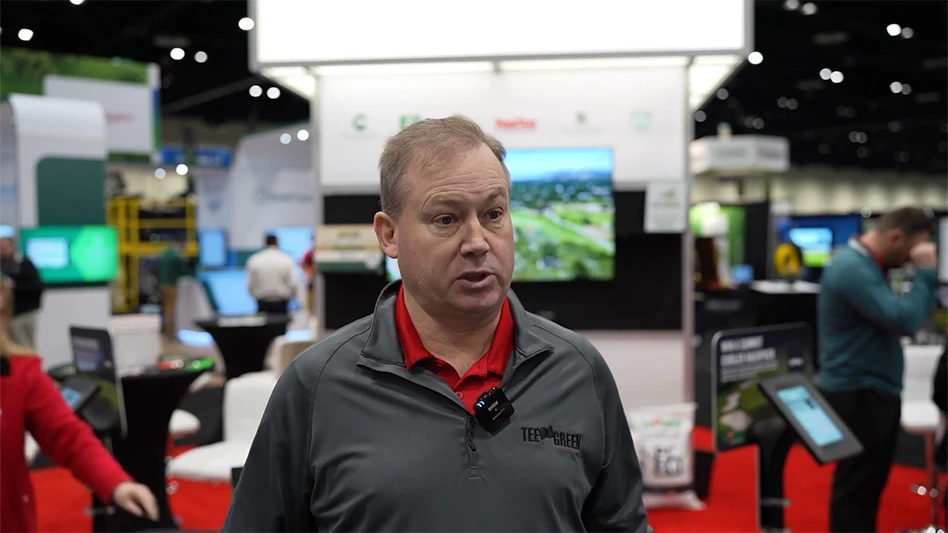
Golf Course Industry Magazine had a chat recently with Dr. Thomas Fermanian, a recent addition to the team at Lebanon Seaboard, where he is working extensively on research review, both internal and external, and validating and refining the biological and biostimulant offerings of the company’s products. Dr. Fermanian is a professor emeritus at the University of Illinois’ Department of Crop Sciences. His university research emphasis includes the automated sensing of turfgrass health, weed management and plant growth regulation.
GCI: Are there any new advances in bionutrition that have you excited?
TF: The greatest advances in bionutrition will probably come from our better understanding of the genetics involved in nutrient uptake and utilization. Some of these investigations are currently underway in turfgrass laboratories, but are a ways off from practical use in the field. This knowledge will eventually let us refine both the materials we use for fertilization and biostimulation and also breed new cultivars that are more efficient in nutrient uptake and utilization.
GCI: Are bionutrition products more mainstream and accepted than they were, say five to 10 years ago?
TF: I would agree that bionutrition products are becoming more accepted for several reasons. First, most turf managers understand that turf health is dependent on a balance of all required mineral nutrients and may benefit at times from other organic compounds in bionutrients products. Second, while bionutrients products often do not produce color change in the turf as rapidly as mineral nutrients, they are generally safer to use and can promote healthier growth.
GCI: So, it is wise for superintendents to take a closer look at bionutrients?
TF: While the research has mostly been done in controlled environments, many studies in both turf and other cropping systems provide evidence of more robust root systems and protection from environmental stresses. Until scientists understand the mechanisms for these responses it may be useful for turf managers to investigate the value of bionutrient products for their particular situation.
GCI: Can you offer suggestions to superintendents on how best to use bionutrients?
TF: It is very difficult for turfgrass scientists to set up field studies that apply to all possible situations and environments. Superintendent should conduct on-site evaluation themselves, but always exclude a small area to serve as a control for evaluation. These on-site evaluations should be conducted several times in different locations and possibly across several seasons to obtain a true value for using a selected product.
CGI: Anything they should be cautious of when using bionutrients?
TF: Just like any product (fertilizers, pesticides, cultivation, etc.) added to the turf environment, bionutrients should be applied at recommended rates. Over-application may lead to imbalance in plant hormones.