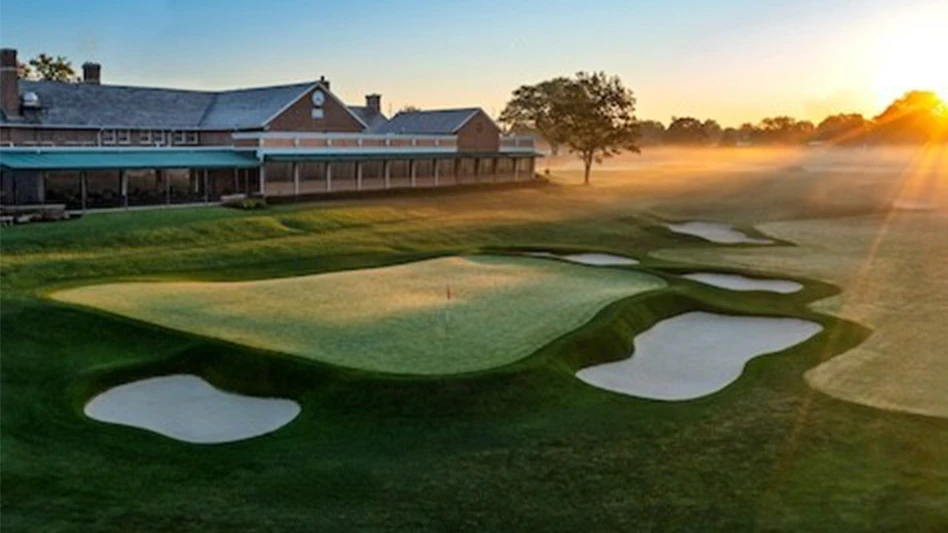
Ryder Golf Course, at Fort Bragg, N.C., dates to the 1930s, but the idea of the sanctuary is practically newborn.
|
|

“Only 18 other clubs in North Carolina are Audubon certified,” Aycock says. “Most are private or exclusive and they are among the best in the state.”
Aycock was golfing at one of those courses, The Meadowlands, when he noticed a sign indicating that it was an Audubon sanctuary. He called his environmental management staff, setting off a yearlong pursuit of certification.
The program requires golf course managers to establish procedures and document their efforts in six areas: environmental planning, wildlife and habitat management, chemical use reduction and safety, water conservation, water quality management and outreach and education. When the course achieves certification in all six categories, it earns the Certified Audubon Cooperative Sanctuary designation. The organization has certified more than 500 courses across the country.
“For the environment, it’s the right thing to do for the golf course,” says Robert Taylor, the golf pro at Ryder.
To the untrained eye, certification doesn’t bring many changes. On closer look, some roughs are rougher, ponds are stocked with fish and there are more signs of animal life.
Most noticeably, the banks of water traps and streams have grown up. To protect water quality, caretakers no longer apply herbicide up to the water’s edge.
“Now it’s a real habitat,” says Julia Love, Fort Bragg environmental specialist assigned to the golf course project.
To the ear, the change is more obvious, according to Love.
“We put out bluebird boxes as a case study, and now we have four nesting pairs,” Love says. Before, “you would occasionally see one flying past.” The singing bluebirds highlight an increase in wildlife throughout the course.
Behind it all is a golf course staff educated in a new way to operate.
“It’s a case of trying to do the best thing for the plant life, the wildlife and the community,” Taylor says. “Overall, it makes the golf course a better place to play.”
For instance, to reduce chemical use, the staff monitors the fairways closely and applies more specifically, according to Taylor.
“In the first place it’s cheaper,” says Love. “We cut back on fertilization, we mow less of the area and we reduced fuel, chemical and water use as well.”
Golf courses on federal land face growing restrictions in the next decade, Love says. For instance, use of potable water for irrigation will be forbidden. With certification, Ryder has a head start on meeting those regulations, she says. The pursuit of certification led to one of Fort Bragg’s record 13 positive findings on its recent environmental performance assessment system evaluation.
The Audubon program welcomed the participation of the Fort Bragg golf course.
“We know that the armed forces have shown a strong commitment to integrated pest management and we are happy they have chosen to use this program to achieve their goals,” says Joellen Zeh, program manager for the Audubon Cooperative Sanctuary Program. “This particular course has made significant changes to its own property.”
Audubon certified Ryder under specific requirements for golf courses, but there are cooperative sanctuary programs for schools, neighborhoods, municipalities and other open areas, according to Zeh.
“What’s exciting about golf courses for me, as a wildlife conservationist,” says Zeh, “is that they combine the four aspects of wildlife habitat – food, water, shelter and space – often missing from developed areas.”
For more information, contact the Audubon Cooperative Sanctuary System at 518-767-9051, or the Fort Bragg office of natural resources, at 910-396-3341.