Some of the best moments for golf course superintendents are the ones when they can snatch success out the jaws of defeat. Or, more to the point for our purpose here, snatch that success out from the succulent jaws of goosegrass and crabgrass.
It’s getting close to that time of the year (at least in the south) when these two jokers come calling, which could make any superintendent wonder, “Who invited these guys, anyway? Why do they keep showing up?”
Apparently, they can’t take a hint. From the southern tip of the transition zone to many points northward, goosegrass and crabgrass arrive with the warming of the temperatures. Well, specifically the warming of the soil temperatures.
The golf course superintendent does have an advantage in this annual battle of man versus weed. That advantage being that turf managers know exactly when these unwelcome guests will be on their way. Which means they have time to strategize. Time to plan the annual defense.
For a growing number of superintendents, a good chunk of that annual defense strategy is centered around the use of a particularly effective preemergent… The Andersons’ Crabgrass and Goosegrass Control.
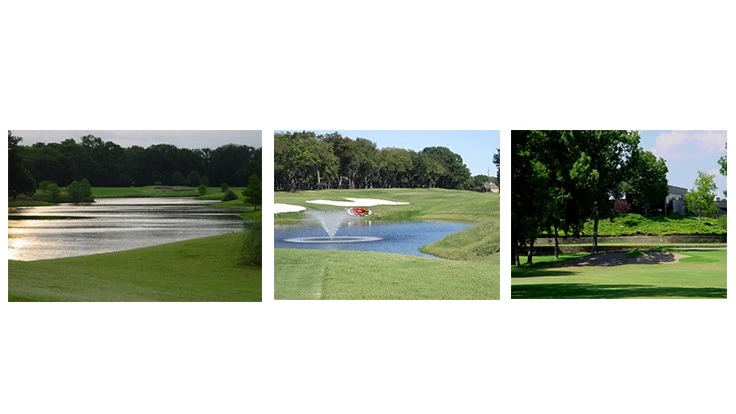
 One of those preemergent strategists is John Rowe, the superintendent at Firewheel Golf Park in Garland, Texas, not far from Dallas.There isn’t a whole lot of preemergent options out there labeled for greens,” Rowe says.
Although the fairways and tees at Firewheel are mostly clean, he’s been dealing with the weeds (specifically goosegrass) on the greens for some time now.
About three years ago a particularly bad infestation on Firewheel’s Bermuda greens made Rowe look for something new. Two of the courses that make up Firewheel’s 63-hole layout have Bermuda greens; the 18-hole Lakes Course, and the 18-hole Old Course. The three nines that make up The Bridges Course are all bentgrass greens.
“Everyone (other courses) around this area is going to bermudagrass greens,” Rowe says. “They’re putting in what the people want to play.”
With that heavy infestation a few years ago, Rowe called his sales rep and asked for the best product out there. He’s been using Anderson’s Goosegrass and Crabgrass Control ever since.
Timing is the key here. Crabgrass germinates when those soil temps hit about 55 degrees. Goosegrass about 65 (interestingly, the goosegrass germination takes place the same time that azaleas and dogwoods flower, for all of you Masters’ fans out there). The Andersons’ Goosegrass and Crabgrass Control combines oxadiazon (the active ingredient in Ronstar) with bensulide, and advocates season-long preemergent control.
“We apply the preemergent before the soils hit that 55-degree temp,” Rowe says. “Late February to early March.”
The labeled full rate of The Andersons Goosegrass and Crabgrass Control is 2.6 lbs. John only uses the product on his Bermuda greens, not the bent.
“We use a half rate twice,” Rowe says. “A half rate (1.3 pounds per thousand), at a two-week interval.”
So, a late February application, then again a couple weeks later in mid-March. This has been, for Rowe in northeastern Texas, and many others in the south, a recipe for success; for snatching that success, that is.
If it wasn’t for The Andersons’ product working so well, Rowe would have been left with only one alternative. “Well, the other option is to let the goosegrass germinate and hand pick it all,” he says, with only half a tongue in cheek, adding he has exercised that labor-intensive option in the past.
And finally, as far as crabgrass -- definitely now the lesser of the two weed evils -- Rowe did recall a pretty severe outbreak back in 2011, his first year at Firewheel. That’s when he tried The Andersons 0-0-20 with Dithiopyr.
“We had a heavy crabgrass problem that first spring,” he says. “I was late on the preemerge. That The Andersons product was recommended to me to kill some of the young plants in the 1 to 3 tiller stage. It worked perfectly. Crabgrass hasn’t been a problem ever since.”
No more results found. It’s getting close to that time of the year (at least in the south) when these two jokers come calling, which could make any superintendent wonder, “Who invited these guys, anyway? Why do they keep showing up?”
Apparently, they can’t take a hint. From the southern tip of the transition zone to many points northward, goosegrass and crabgrass arrive with the warming of the temperatures. Well, specifically the warming of the soil temperatures.
The golf course superintendent does have an advantage in this annual battle of man versus weed. That advantage being that turf managers know exactly when these unwelcome guests will be on their way. Which means they have time to strategize. Time to plan the annual defense.
For a growing number of superintendents, a good chunk of that annual defense strategy is centered around the use of a particularly effective preemergent… The Andersons’ Crabgrass and Goosegrass Control.
One of those preemergent strategists is John Rowe, the superintendent at Firewheel Golf Park in Garland, Texas, not far from Dallas.There isn’t a whole lot of preemergent options out there labeled for greens,” Rowe says. Although the fairways and tees at Firewheel are mostly clean, he’s been dealing with the weeds (specifically goosegrass) on the greens for some time now.
About three years ago a particularly bad infestation on Firewheel’s Bermuda greens made Rowe look for something new. Two of the courses that make up Firewheel’s 63-hole layout have Bermuda greens; the 18-hole Lakes Course, and the 18-hole Old Course. The three nines that make up The Bridges Course are all bentgrass greens.
“Everyone (other courses) around this area is going to bermudagrass greens,” Rowe says. “They’re putting in what the people want to play.”
With that heavy infestation a few years ago, Rowe called his sales rep and asked for the best product out there. He’s been using Anderson’s Goosegrass and Crabgrass Control ever since.
Timing is the key here. Crabgrass germinates when those soil temps hit about 55 degrees. Goosegrass about 65 (interestingly, the goosegrass germination takes place the same time that azaleas and dogwoods flower, for all of you Masters’ fans out there). The Andersons’ Goosegrass and Crabgrass Control combines oxadiazon (the active ingredient in Ronstar) with bensulide, and advocates season-long preemergent control.
“We apply the preemergent before the soils hit that 55-degree temp,” Rowe says. “Late February to early March.”
The labeled full rate of The Andersons Goosegrass and Crabgrass Control is 2.6 lbs. John only uses the product on his Bermuda greens, not the bent.
“We use a half rate twice,” Rowe says. “A half rate (1.3 pounds per thousand), at a two-week interval.”
So, a late February application, then again a couple weeks later in mid-March. This has been, for Rowe in northeastern Texas, and many others in the south, a recipe for success; for snatching that success, that is.
If it wasn’t for The Andersons’ product working so well, Rowe would have been left with only one alternative. “Well, the other option is to let the goosegrass germinate and hand pick it all,” he says, with only half a tongue in cheek, adding he has exercised that labor-intensive option in the past.
And finally, as far as crabgrass -- definitely now the lesser of the two weed evils -- Rowe did recall a pretty severe outbreak back in 2011, his first year at Firewheel. That’s when he tried The Andersons 0-0-20 with Dithiopyr.
“We had a heavy crabgrass problem that first spring,” he says. “I was late on the preemerge. That The Andersons product was recommended to me to kill some of the young plants in the 1 to 3 tiller stage. It worked perfectly. Crabgrass hasn’t been a problem ever since.”