Hosting a PGA Tour event is a significant event for any golf club. For Travis Pauley, the start of The Barclays marked the culmination of years of preparation.
.jpg) |
Pauley is the golf course superintendent at Plainfield Country Club in Edison, N.J., where The Barclays, the opening round of the FedEx Cup playoffs, is being contested.
Pauley, who's been at Plainfield for a decade, is hosting the Barclays for a second time was in charge when the club hosted the tournament in 2011. But this year's conditions are far different from those of four years ago when torrential rains in the wake of Hurricane Irene swept over the course and forced the PGA Tour to shorten the event to 54 holes.
"The big thing last time was we had over nine inches of rain during advance week," Pauley recalls. "So there was almost no chance of firming the fairways up. The greens were actually pretty good last time, but we had rain Thursday morning and then it was over and we knew at that point that the hurricane was going to shut us down for Sunday."
This time around the golf course at Plainfield, which was completed by Donald Ross in 1916, is playing to 7,012 yards on the scorecard with a par of 70 (it played to a par 71 four years ago). The conditions this week are a bit more exacting than what the club's members face.
"The greens are much, much faster," Pauley says. "They're much, much firmer than the members would play them. In any event like this [depending on the weather], you're going to stress the turf out, and if you stress the turf out on a daily basis like we're doing right now, we wouldn't make it through the summer probably. Part of the reason we don't push the grass to the extreme all summer long is so we can push it really hard this week and it will survive; it's doing an exceptional job this week."
 |
As any superintendent knows, it's possible to push the turf too hard and the consequences of doing so can be catastrophic. But Pauley has worked closely with PGA Tour agronomist Dennis Ingram to see that that doesn't happen.
"We know what the greens will do," Pauley says, "and how the turf has performed all summer long, how far we think we can push it. I would say the turf was in as good a state of health going into this event as I seen probably since I've been here. We're very fortunate in that regard. We had winter issues with the green but you wouldn't know that now."
As the galleries at Plainfield focus their attention on the world's finest players, Pauley concentrates on the health of the turf they compete on. "I’m in contact with [Ingram] multiple times a day," he says. "We come to an agreement, balancing playability with turf health and also what the rules officials want for the setup of the event. We're tasking readings every day and we're seeing how the how the golf course is playing. If we need to make adjustments in how it plays, we all get together and come up with a plan and make sure that we can work it work.”
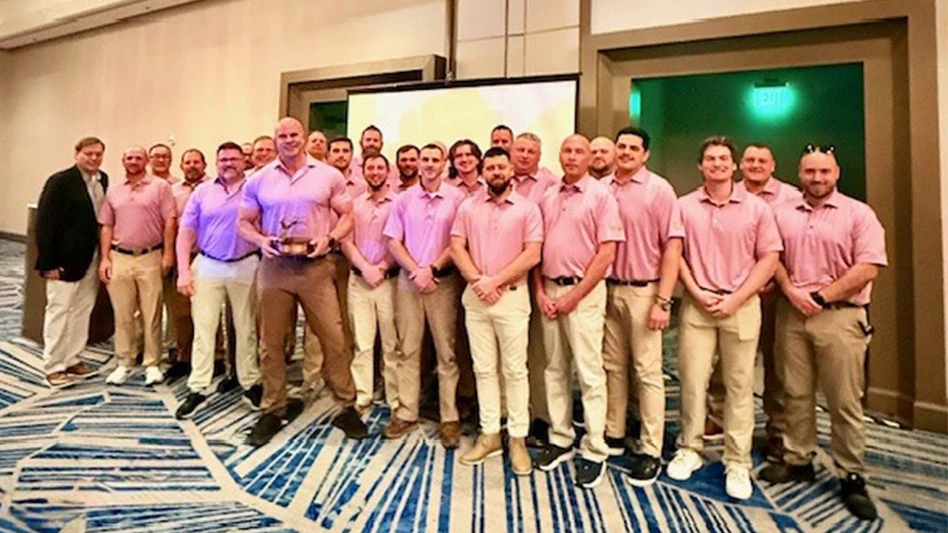
Successfully staging a tour event requires an armada of support. Pauley's staff this season numbers 27 but they have been assisted by more than 10 superintendents from other facilities, interns and other industry professionals. About 70 volunteers have been on hand each morning during tournament week and about 50 each evening.
"That allows us to mow all the short grass, greens, tees and fairways in the morning," Pauley says, "and then we'll touch up during the evenings. It takes almost a hundred people in the mornings to cut all the grass, get all the bunkers raked, make sure all the debris is cleaned up and thing like that."
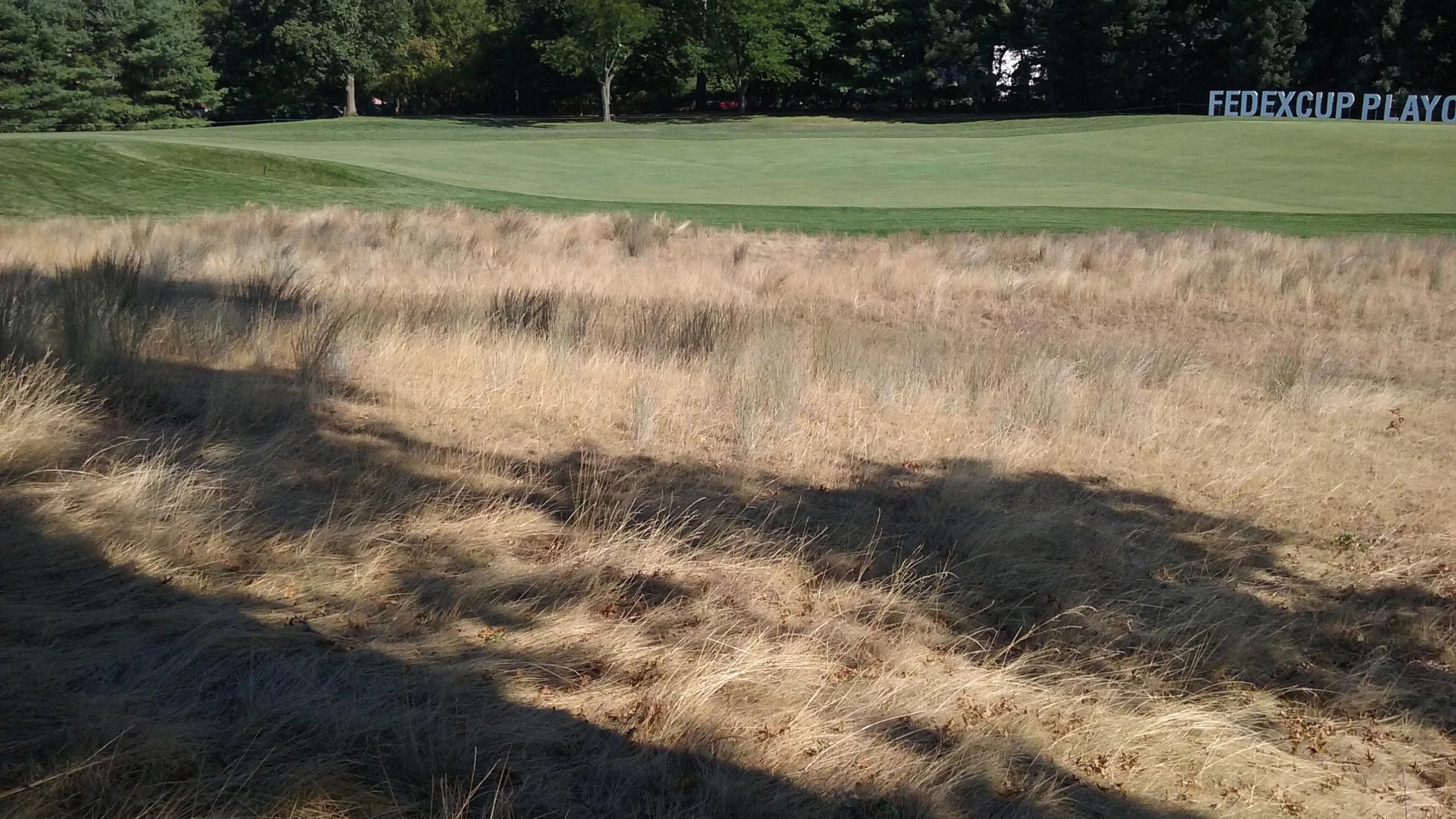
As well manicured as most of the playing area of the golf course is, there are some rough edges here and there. That's by design. Portions of the rough, notably some areas of fescue, been left to grow naturally, with little water and little in other maintenance. While it hasn't been displayed much on TV, the fescue provides a golden brown contrast to the green of the tees, fairways, and putting surfaces.
"It helps break up that sea of green, I always say," Pauley says. "It's visually appealing but also, we don't irrigate that area at all. Most everything out there that's green and mowed, we're irrigating to keep the course in a condition the members expect. We are going to establish more [fescue areas] this fall and continue looking at areas we can add without affecting playability."
Pauley notes that players and spectators alike are seeing the “real Plainfield” this week. "We didn't get a chance to show the golf course off last time," he says. "It really was designed in a time when things were firmer and faster."
Latest from Golf Course Industry
- Foothills Golf Club picks Landscapes Golf Management
- Reinders to host 27th biennial Turf Conference
- Trade show rookie
- From the publisher’s pen: The business of bunkers
- Western Golf Association names new chair
- The Toro Company gives $50,000 to support Rounds 4 Research
- U.S. Battery celebrates 100th anniversary
- Lawrence Yacht and Country Club turns to Troon