It goes without saying that golf is a challenging endeavor, even for the elite competitor. But some would say the game is more taxing than it should be for recreational players because they are a.) playing longer golf courses than they should; b.) courses are set up to be too difficult for them or c.) both of the above.
.jpg) |
Most golfers relish the opportunity to play a great golf course. But what defines great? Is it a layout that rewards good shots and intelligent decision making while penalizing mistakes? Or is greatness measured by difficulty alone? Does a course achieve elite status merely because it stretches to over 7,000 yards or features an abundance of forced carries?
A lot of people who care about the game have spent considerable time and energy pondering that question. One of them is Mike Davis, the United States Golf Association’s executive director.
Davis, who assumed the executive director’s post in 2011, has been with the USGA for a quarter-century. At one time, he was the organization’s senior director of rules and competitions and was responsible for the course setups for the U.S. Open, U.S. Women’s Open and U.S. Amateur.
Over the course of his career, Davis has seen courses get longer and more challenging. But he feels that American golf course architecture is starting to move in a different direction.
“For a while in this country, hard seemed to equal good,” he says. “But now you see golf courses being built that have wider playing areas, that are built with shorter teeing grounds for that segment of players that only want to play from 4,800 yards or whatever the yardage is. So we think we’ve kind of seen this Bell Curve and we’re on the downslope, heading back to where golf used to be.
“It’s all about enjoyment and fun. People don’t like to look for their balls. People don’t like to lose balls. People generally speaking don’t like forced carries, at least some part of the golfing population. I’ve seen that trend in new courses that have been designed in the last two years.”
Davis understands that for golf to thrive it must be enjoyable for players of all ability levels. He points out that the industry has encouraged golfers to play shorter courses through the introduction of programs like Tee it Forward. But he says there are other steps facilities can take to put the recreational player in a comfortable environment, such as adjusting the heights of their fairways and rough.
“When it comes to grass heights, it’s been fascinating,” Davis says. “Where fairways have been cut lower and lower and greens are getting faster and faster, there is this notion that we should have high rough. And the reality is we firmly believe that raising the height of the cut of fairways is probably a good thing for recreational play.
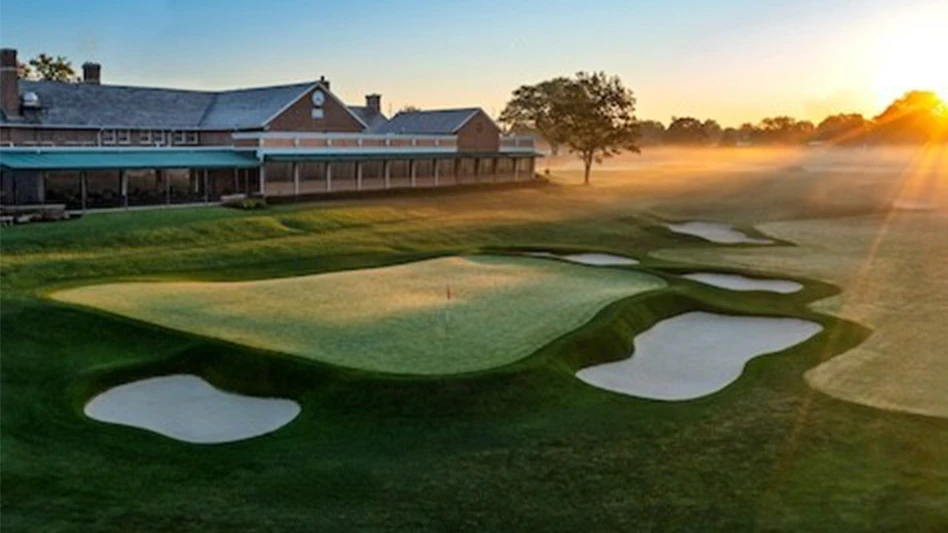
“I’ll give you an example. When we played (the U.S. Open) at Merion in 2013, we played on fairways that were roughly half-an-inch. When we played the 2005 U.S. Amateur and 2009 Walker Cup there we played on fairways that were about a quarter-inch.
“We raised it. We raised it to about the same height we saw maybe 25 or 30 years ago. And now all of a sudden, recreational golfers or, in this case, the members at Merion had a much better experience because they could get the ball off the ground; it was easier to hit pitch shots.
“As to the speed of greens, the faster we get the greens the longer it takes to play a round and the more agronomic pressures are put on greens. And ultimately in some cases it compromises the architecture of greens.
“So I think that all this gets back to the idea that golf is supposed to be fun. There’s supposed to be a challenge to it. But having very high rough everywhere and really fast greens and fairways cut too low, that’s not doing anything to help the game.”
During the Golden Age of American golf architecture (roughly the period from 1910 until World War II), many architects took pains to accommodate the less-accomplished player. Some still do today.
But somewhere along the way golf course design became a game of “Can You Top This?” As it became easier to move greater quantities of earth, designs became more elaborate. And as architects were celebrated for creating challenging layouts, the concerns of the recreational player were largely ignored.
Davis says the USGA is promoting a different approach to the issue. “I think that over the last 40 years or so we’ve seen a trend in this country where hard equals good,” he says. “And we actually think enjoyment equals good.”
Rick Woelfel is a Philadelphia-based writer and frequent GCI contributor.