Terrance DiLoreto
When the 1974 Robert Trent Jones Sr. aerial images of Crag Burn Golf Club were discovered in the clubhouse’s attic, director of grounds Terrance DiLoreto knew a renovation was in the New York club’s future.
“The bunkers were seriously out of this world,” DiLoreto says.
Historical relevance bleeds on the East Aurora property. Crag Burn opened in 1972, but in years prior, the Buffalo-area facility was filled with stables and polo fields. The horse stables still stand, and the original water tower once used is still visible by the golfers. Minor renovations on the course have been made over the years, some even led by Rees Jones.
The front nine encompasses a parkland setting. The back nine is more open, with little woods in sight.
After finding the images and doing some testing, DiLoreto discovered the green sizes had shrunk by nearly 20 percent of their original sizes and become “egg shaped.” Bunkers had lost their unique shapes, and after two prior bunker renovations, had gotten bigger.
When DiLoreto proposed a renovation project to expand the greens and bring the bunkers back to the Jones intent, he was met with skepticism. “They were like, ‘yeah, right, you're out of your mind’,” DiLoreto laughs. But after the recent surges in golf, membership is overflowing at the private club and views evolved on the potential renovation.
After three years of detailed planning alongside architect Tyler Rae, the project commenced on Aug. 4 and concluded at the end of October. “We had every detail dialed in,” DiLoreto says.
Choosing Rae to lead the restoration was a no-brainer for the club. “I was blown away with Tyler’s knowledge on Robert Trent Jones stuff,” DiLoreto says. “He’s one of the smartest, knowledge-filled guys I’ve ever met when it comes to golf course architecture.”
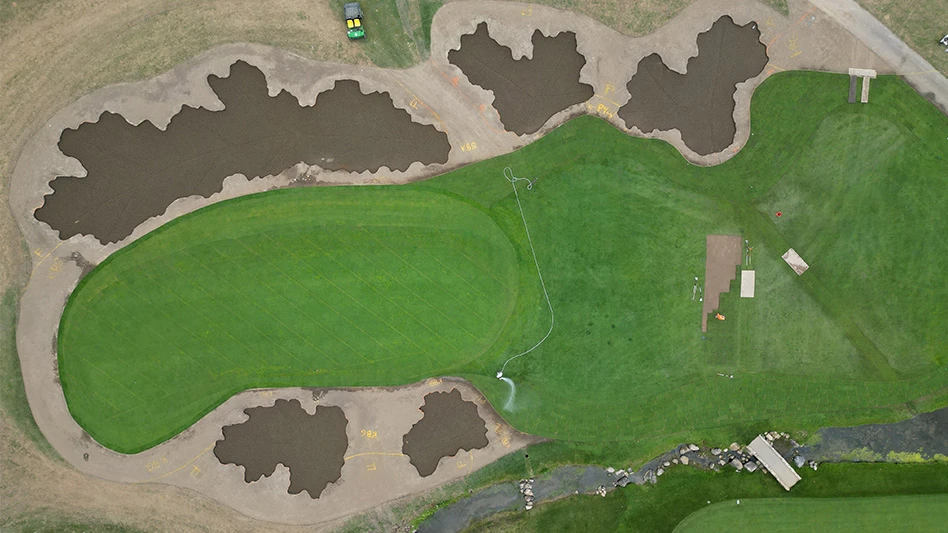
The project focused on restoring and moving all bunkers back to their original 1974 shapes, sizes and locations, expanding greens and installing irrigation around greens, fairways and approaches.
Bunkers once described by DiLoreto as “round saucers,” lacking shape, are now eye-capturing, aesthetic additions to the course. With lacy edges and dramatic contours, the bunker restoration enhanced the course visually and strategically. Bunkers were lined with Better Billy Bunker, topped by fresh white. The contrasting white sand with healthy, green turf captures the eye. In a video produced by Golf Course Creative, Rae describes the restoration as bringing back a “Great Gatsby era vibe,” making the course more unique from others in the Buffalo area.

On the front nine, a new fairway bunker was added to second hole, a sharp dogleg par 5, and two additional bunkers were added to the layup area. On the third hole, the front of the green was expanded, opening it up for playability, and a runoff was added to the back of the green.
Bunkers on the fifth hole, a long par 3 over, were rebuilt, and the front and back left sides of the green were expanded and recontoured.
On the back nine, among other changes, No. 13 green’s back right and left corners have been expanded. No. 15’s fairway is now expanded on the left side, and its left greenside bunker has been restored. No. 17 is now fully surrounded by striking sand traps.
Golf Preservations Inc. installed new drainage in every green, and NMP Golf Construction led construction on the course. Siphon drains were installed, and the drain lines on the greens were placed in six-foot spacings. Expansions were filled with a custom mix matching the existing soil profile. Matching the mixes took two and a half years to perfect. Thirty-three tees were also rebuilt.
Every detail was planned precisely. When Crag Burn aerified greens in 2023, they took the plugs from aerification and grew in a nursery. That bent-Poa annua sod was then used to expand the greens during the project. With expanded greens, the amount of hole locations increased, averaging three new locations per hole. “It’s an all-around win for everybody involved,” DiLoreto says.
From a golfer's standpoint, the renovation enhanced playability and aesthetics. Carefully curated bunkers line the greens and fairways, proving a challenge to most. From a maintenance standpoint, the renovation will result in more hand and rotary work for the team. “The bunkers are closer to the greens now,” DiLoreto says. “Before, we had a guy that was on a riding mower.”

With the renovations completed, DiLoreto and his team are preparing for golfers to play the course for the first time when the club opens for the season in 2026. “There’s a lot of excitement built around this,” DiLoreto says, “and I think members and guests, when they come out here, it’s going to be an even more special treat than what it is now.”
Kelsie Horner is Golf Course Industry’s digital editor.