There’s a reason why the field of agronomy courts a certain personality type: Grass doesn’t talk back. And yet, a time comes when every agronomist needs to answer somebody.
For Tyler Truman, director of agronomy and grounds across 500 acres of kept turfgrass at Sun City Palm Desert and the 36 holes of Mountain Vista Golf Club therein, recent years of proactive turf study have found him ever playing the dual roles of agronomist and ambassador.
With an ambitious aim to alter the costly, water-intensive and arduous overseed process that annually weighs upon the Coachella Valley and desert golf communities beyond, Truman has spent the past three years studying the possibility and prerequisites of introducing hybrid zoysiagrass to his grounds.
Presenting the allure of a year-round playing surface, zoysia’s “Z” might be further applied to a concurrent “Zero.” Though amply seen in the Southeast and Midwest, the figure marks how many golf properties in either the 120-course Coachella Valley or across the entirety of Southern California have successfully achieved or even attempted a full-on zoysia transition.
For Truman, to game the possibility and potential of zoysia upon his turf lab has been one thing.
Explaining the process to the nearly 5,000 homeowners across Sun City’s golf-crazed 55-and-older population? It’s been a cultivation unto itself.

Leaf lab
Over the past three years, Truman, working in concert with the USGA Green Section, has done more than merely tinker with growing zoysia in the desert. Rather — and rather impressively — he’s dispelled both long-held belief and conjecture that such growth could even be achieved in a hot and arid environment.
The process has found success by way of deconstruction — or what is perhaps better described as reverse engineering. By finding out what doesn’t work, Truman has pared down to what does.
Between assessing myriad zoysia hybrid cultivars, multiple site plots, varied sprig timelines and differing sprig rates, what Truman has accomplished, by way of attrition, is a strong and sound zoysia argument — and one that he’s in the process of presenting to his player-member-residents and their decision-making board of directors.
Both during and before such presentations came the testing.
Starting with 31(!) varieties of zoysia cultivars on an acre’s plot adjacent to the 11th hole of Mountain Vista’s San Gorgonio Course, Truman and his colleague, Matteo Serena, senior manager of irrigation research and services for the USGA, ultimately found two varieties that met their collective approval: a DLZ-1408 strain and Stadium Zoysia.
The former, not yet on the market, was supplied by Texas A&M University, which has since sold the rights to DLZ-1408. That left the Stadium Zoysia option, which Truman and Serena discerned was the quickest to establishment and held the darkest color year-round.
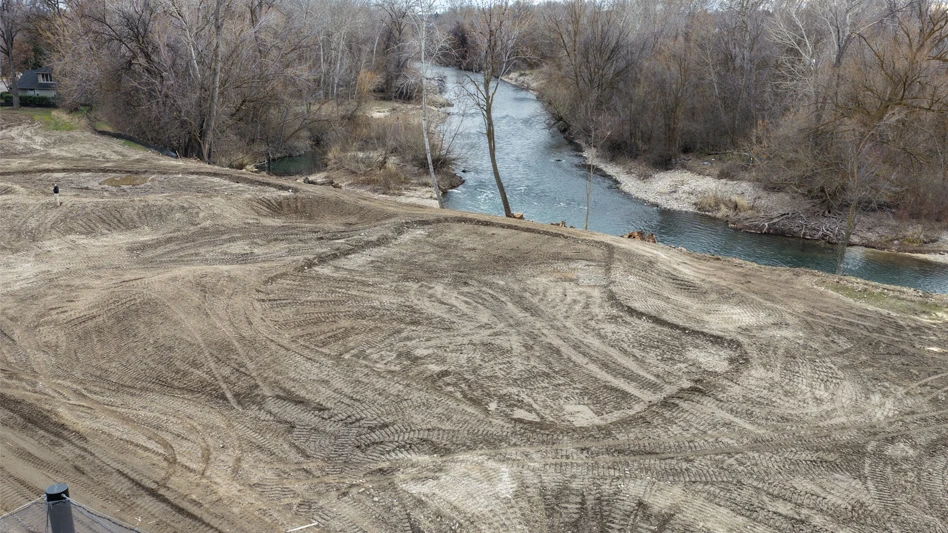
This past spring and summer, upon an alternate two-plus-acre test plot adjacent to the eighth tee of the grounds’ Santa Rosa course, the two then sprigged with varied bushel-per-acre rates (400, 600 and 800) across March, April, May and July. Eventually, they determined that the ideal sprig time was the onset of April through the close of May, and that the sprigging sweet spot was 500 bushels per acre.
After pigmentation sampling ensued with an aim to at least approach the allure of eye-popping ryegrass, time neared for Truman to exit the vacuum of his lab and enter the world of presenter.
Concerned citizens brigade
In the days preceding Thanksgiving, at the third and final resident presentations on the potential turf transition, Truman paced near the dais of Sun City’s Speakers Hall auditorium space. Approximately 150 attendees filled the small sea of seating, each eyeing a sizable screen projecting: “Project Zoysia.”
With a manner offering equal parts self-deprecation, humor, educator and, yes, marketer, Truman’s presentation served as his final opportunity to educate residents on zoysia’s potential before bringing his findings to the community’s board.
After offering introductory jokes and quips, he moved on to the meat: “Why are we looking at zoysia?” he asked rhetorically (at least at first).
Cost is, of course, boss in such framework, and amid explaining that he and his colleagues were in the final stages of a broad financial analysis, Truman wasted little time weighing his case with:
“There’s the reduction in cost, of not having to overseed with ryegrass every year. It’s one of the first reasons we started looking at this. Three years ago, the costs of ryegrass seed went from, like, $1.30 per pound to what is now over $2.60 a pound. For us, that means it went from $300,000 a year up to almost $700,000.”
Complemented by the projection’s imagery and charts, the super ensued with a stellar zoysia argument for a substantial reduction in water use (upwards of 30 percent), along with explaining the importance of regional water conservation.
As pictures paired with process, Truman went slide to slide on his zoysia testing, balancing the progress and otherwise of reverse engineering before sharing a hint of personal passion for the process.
“This was taken on April 25, a month after we seeded the first plot,” Truman narrated over a zoysia image. “There was a resident who came out [of his house] and asked, ‘Tyler, why do you come out every day to look at it? Nothing’s changed.’ But I saw changes.”
Q&A time
His case offered, Truman, between slight inhales, opened the floor for a Q&A session. Like a boxer bracing for the opening bell, it appeared as if the superintendent knew he was about to absorb a few hits.
Part concerned citizens, part golf geeks, part repetition in query/reply and, yeah, part a few senior moments, the questions proved equally informed and skeptical, covering:
Zoysia in home yards Toxicity in pigment The variety’s ability to hold up to excessive rains Whether other courses in the Coachella Valley were considering it Cost benefit analysis (again and again) Sprig vs. seed vs. sod Greens conversion Course closure time Turf playability and divotsTo wit:
Of the nascent…
Q: Where do you get it?
Truman: I get it directly from a sod farm.
Of the comical…
Q: I’m sure many courses around the country play on zoysia. What’s the playability?
Truman: From what I’ve heard, there are a few people who say, ‘It grabs my club,’ but, for the most part [interrupted by attendee giggles], for the most part, people have told me they really enjoy playing off of it.
And … of the noted skepticism …
Q: Your explanation and your pictures are very good, but can you tell me how many golf courses in the Coachella Valley are doing this?
Truman: Us.
Q: Us. So we are in the experimental stages, with our weather that isn’t the Midwest?
Truman: Phoenix-Scottsdale is actually working with it [zoysia], which is very similar to us. FireRock [Country Club] sodded 30 acres of it just this past summer. Phoenix Country Club, a very high-end club, is looking to sprig their course this next year. So, we’re not the first in a desert environment. … Everybody here on the West Coast thinks you can’t grow zoysia; I have proven that you can. You need to understand what you’re growing. It’s not Bermudagrass. It’s not ryegrass. You need to treat it as zoysia.
Q: So, you haven’t got your numbers together yet, but it sounds like it’s a fait accompli.
Truman: This [presentation] is what I’m seeing. I’ll be presenting those numbers to the board, and we will take input from the residents.
Q: And then you will move it [the decision] to the residents?
Truman: That will be up to the board of directors.
Slightly bruised, but unbowed, Truman concluded his time with gratitude and then welcomed a queue of post-presentation comments and queries. And while the superintendent conversed onward after just wrapping up 45 minutes, his manner buoyant and energy sanguine, one could argue on his behalf that soon standing alone with his grass now seemed a very alluring place to be.

Explore the February 2026 Issue
Check out more from this issue and find your next story to read.
Latest from Golf Course Industry
- From the publisher’s pen: ‘Incredibly intentional’
- VIDEO: 'It's their livelihood'
- Reel Turf Techs: TJ Vollmar
- Bernhard and Company names G.C. Duke as North American Distributor of the Year
- Course at Sewanee picks KemperSports for management
- WiTricity expands wireless charging technology
- Shining star
- SiteOne Landscape Supply acquires Reinders