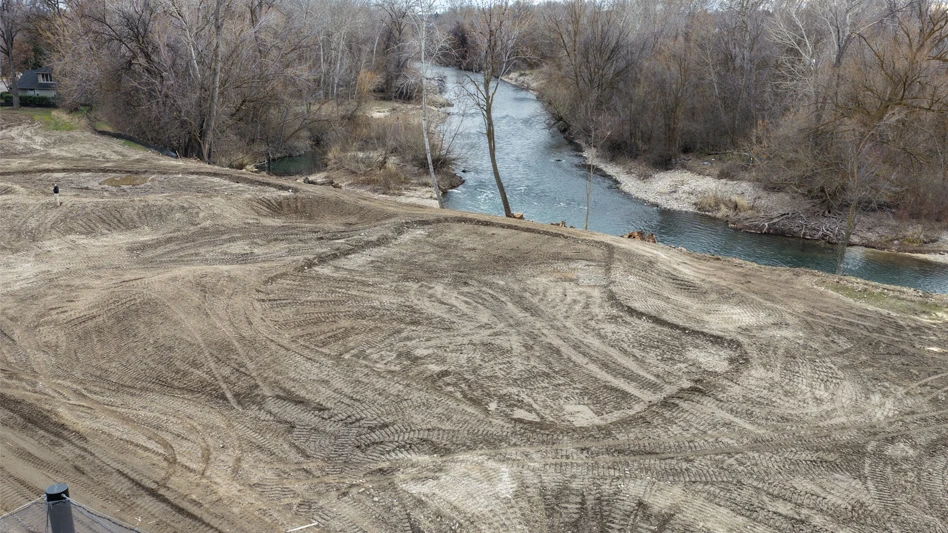
Severe weather poses a constant threat to golf courses and driving ranges. Damage sustained from Hurricane Helene in Florida, Georgia and North Carolina, for example, decreased rounds 10 to 15 percent in September 2024 — a prime example of how a single catastrophic weather event can impact golf courses and revenue.
According to Sentry’s recent C-Suite Stress Index, more than 65 percent of business leaders fear the next major weather event could force their company to close for good. That concern is even higher among businesses with fewer than 50 employees, like many golf courses across the country.
Severe weather season arrives as golf course operators are busy getting courses in playing condition and preparing to welcome patrons for peak-season play. That prep must include golf course storm preparation as severe weather events are expected to become more frequent and intense.
The more prepared you are, the better your course will fare when damaging weather arrives. Prioritize these golf course risk management strategies to give your grounds — and business — the best chance of weathering the storm:
Conduct a hazard assessment of weather events for your area
Get a clear understanding of the specific types of weather-induced damage your course is most likely to sustain in a weather event. If your course is near a body of water, for example, a severe convective storm could flood your fairway and greens. But if you’re in an arid region, lack of precipitation and drought could increase the risk of wildfire. Your course’s specific weather-related risks should inform your tailored emergency response plan.
Develop a course-specific emergency response plan and execute on it
Base the plan on findings from your hazard assessment and account for the specific landscaping elements on your property. Get emergency response service contracts in place and keep their contact information up to date so you can quickly activate resources — the more time you spend gathering equipment and personnel during an active weather event, the more potential you have for serious damage. If your course is at risk of flooding, you could lose power for an extended period. Identify backup generator suppliers and contract with them ahead of time should you need to move standing water off the course or restore power to other critical infrastructure. Store pumps and hoses onsite.
Establish an emergency notification system for your course
Severe weather can occur in a matter of minutes, and golf course grounds are expansive by design. Implement a notification system through audible alerts, a phone app and an emergency text messaging system that can alert patrons of an imminent storm and direct them to a nearby shelter or the clubhouse. If you don’t have an alert system, create a company policy that directs starters to swiftly patrol the course and alert all players to get to safety when severe weather is imminent. Be proactive when golfers come on inclement weather days by alerting them to the potential for severe weather and noting where storm shelters are located throughout the course.
Designate a safe area for your mowers, golf carts and other equipment
Equipment is a major source of loss for courses exposed to flooding, wildfire and high wind weather events. It’s critical to have a safe place to store this vital and expensive equipment during a storm. If you don’t have a suitable storage facility on site, identify a storage solution close by and prearrange equipment transportation to be used in the event of a weather emergency. At the very least, move equipment to high ground to avoid flood damage.
Create a defensible space around your course as a buffer from severe weather
Wildfires in Colorado, for example, can ignite all the fuel on a mountaintop and spread down the mountains quickly, especially when accelerated by strong spring winds. Reduce the spread of wildfire by creating a barrier around your course with limited wood structures and other ignitable materials. Similarly, you can place temporary or permanent perimeter flood barriers to help prevent floodwaters from permeating your grounds. If you’re designing a new course or making upgrades to an existing one, consider what modifications can help create a defensible space for your specific weather threats.
Maintain your irrigation systems to mitigate damage.
If flames are spreading across fairways and greens, your irrigation system will need to churn a lot of water to reduce the spread. If your system has maintenance issues, it won’t be able to sustain the added pressure, and you’ll lose this critical line of defense. Or, if heavy rain floods your grounds, you’ll need to quickly turn irrigation systems down or off in certain areas to avoid burning out pumps. Consider an irrigation solution equipped with a smart-phone application that makes it easy for someone to change watering patterns from anywhere.
Plan for business continuity after a severe weather event
As damaging weather events increase in frequency and severity, your grounds are at significant risk of short- and long-term damage. Pair risk management with a solid business continuity plan — work with your insurer to help protect profits, support employees and get your course operating again after a disaster.
Review your insurance coverages now — including business interruption, general liability, premises and operations liability, and commercial property — to help ensure your course is protected from weather-related financial losses this season.
Daniel Grant is director of corporate safety services for Sentry Insurance. Sentry insures golf courses throughout the United States, and is the Official Insurance Partner of the USGA, along with the title sponsor of The Sentry a signature PGA Tour event. Learn more at sentry.com.

Tartan Talks 107
The phone call, text message, email or direct message is perhaps the best news a golf course architect can receive: his or her firm landed a contract to design a new course. The news has become especially meaningful considering the decreases in new projects since the golf boom of the late 1990s and early 2000s.
“I would say it’s pure joy, elation, relief, all those emotions,” says Jason Straka, a partner at Fry/Straka Global Golf Course Design. “We’d like to think of ourselves as true artisans. It’s a big opportunity to be commissioned to create something unique, which is rare in this market.”
What goes into landing a new course assignment? And what happens after the upbeat emotions of winning the bid process subsides and the work must be executed?
Straka joined the Tartan Talks podcast for a tactical conversation about designing a new golf course in the modern market. Straka and his longtime partner Dana Fry are currently guiding new projects in Florida, Ireland and Hong Kong.
“It’s an extreme situation from one to the next,” Straka says. “Between those three projects you couldn’t possibly go in more polar opposite directions.”
The full episode can be found on the Superintendent Radio Network page of popular podcast distribution platforms.

COURSE NEWS
Omni Amelia Island Resort & Spa, an oceanfront destination on 1,350 acres at the tip of a barrier island off the northeast Florida coast, is reopening its Oak Marsh Golf Course following a $7.4 million renovation executed by Beau Welling Design. The project’s overarching goal involved protecting the architectural feel of Pete Dye’s original 1972 creation. … Architect Tripp Davis is currently renovating the course at San Angelo Country Club in west Texas. San Angelo was founded in 1920 and expanded from its original nine holes to 18 in 1928-29. … Oldfield Club, a private course in Okatie, South Carolina, has retained its designation as a Certified Audubon Cooperative Sanctuary. … Troon has been selected to manage English Turn Golf & Country Club, a semi-private club in New Orleans. The club hosted a PGA Tour event from 1989 to 2004. … Architect Trey Kemp, superintendent Branden Phillips, irrigation guru Larry Rodgers and VM Golf Services collaborated with the Rankin Independent School District to revitalize Rankin Golf Course in West Texas. … Three Bridges Club, LLC is partnering with Troon to build a Robert Trent Jones II-designed 18-hole course in Salem, Utah.
INDUSTRY BUZZ
Aquatrols released Vivax Oro, a surfactant formulation for managing water across a wide range of soils, turf types and environments. … Envu is now offering Tarvecta, a fungicide designed to prevent soilborne diseases like fairy ring, summer patch and other issues caused by summer stress. Tarvecta is approved for use on golf courses, athletic fields, sod farms and commercial lawns. … Duininck Golf announced the recent acquisition of United GLI, a leader in the golf irrigation industry. … Harrell’s donated $50,000 to the GCSAA Foundation to support the pillars of education, research, advocacy and community outreach. … Graze Robotics recently launched a partnership with Invited to roll out its robotic mowing solutions at Gleneagles Country Club in the Dallas Metroplex. The partnership is part of a pilot program that will run through this year, focusing on demonstrating the capabilities of Graze’s robotic mowers. ... For the fourth straight year, the GCSAA Foundation’s Rounds 4 Research program supporting turfgrass research broke records, yielding $753,135 during its 2025 online auction, an increase of $63,135 over 2024. ... Advanced Turf Solutions announced a new partnership with Arborjet | Ecologel. The collaboration will unite Arborjet I Ecologel’s tree injection technologies with the ATS distribution network.
PEOPLE NEWS
Envu boosted its area sales manager team with the addition of three new hires. Pat Quinlan, Jay Long and Zak Peterson, CSPM, bring more than 50 years of combined expertise in the lawn, golf and sports turf industries to the company. Quinlan joins the Northern Region Turf & Ornamentals team covering northern New Jersey and eastern New York; Long will support customers in eastern Pennsylvania, southern New Jersey and Delaware; and Peterson will serve Illinois and Indiana. … PBI-Gordon announced that Jeff Marvin, PhD, has been promoted to vice president of research and development. … Golf and sports industry veteran Andrew Fleming is back with KemperSports, now as the company’s executive vice president of strategy. Fleming previously worked at the company from 2014-18 as senior vice president of strategy and business affairs. … Control Solutions, Inc. hired Dr. Nathan Nordstedt as the new technical service manager for Quali-Pro. … Bernhard and Company appointed Daryl Nagy as its new sales manager for North America. Nagy has been with Bernhard and Company since October 2023 and has more than 30 years of experience in the turf industry. ... KIOTI Tractor announced leadership changes, welcoming Don Lowe as North American sales vice president and promoting Tim Phillips to sales operations vice president.

Explore the June 2025 Issue
Check out more from this issue and find your next story to read.
Latest from Golf Course Industry
- Reel Turf Techs: TJ Vollmar
- Bernhard and Company names G.C. Duke as North American Distributor of the Year
- Course at Sewanee picks KemperSports for management
- WiTricity expands wireless charging technology
- Shining star
- SiteOne Landscape Supply acquires Reinders
- Talking Turf Weeds 17: Waking up your course after winter with Yusif Jaouni and Matt Herrmann
- From the publisher’s pen: Respect the side hustle