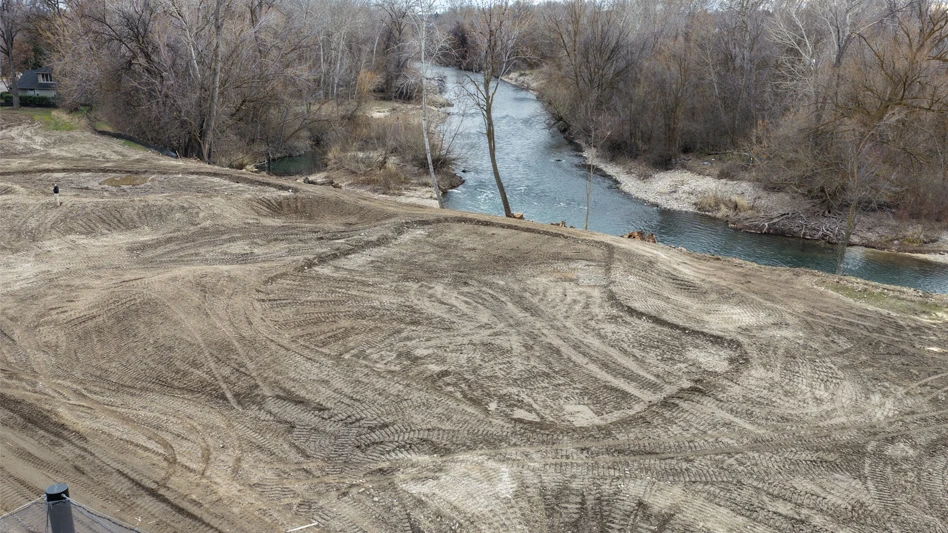
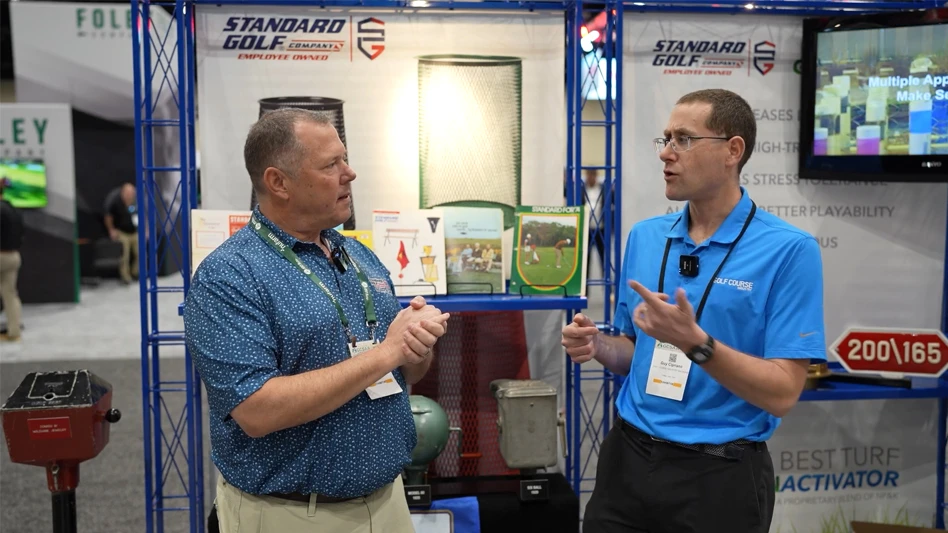
Haywood Waterways Association, a nonprofit water quality organization in Waynesville, North Carolina, recently visited Springdale Resort to assist with a First Green event. Working with sixth-grade students from Bethel Middle School, executive director Preston Jacobsen demonstrated the importance of water quality and guided students through a streamflow activity.
The non-profit opened in 1998 and works to improve and protect the surface water quality in the 77 miles of the Pigeon River watershed of Haywood County. The county is one of only two in the nation whose watershed lines match up directly with the county lines. Haywood is a headwaters watershed, meaning no water enters Haywood County, it only flows out, as the county is the highest point of water in the Eastern United States. “Through that lens, we have a very serious approach to improving this,” Jacobsen says.
The organization focuses on three areas: education, restoration and monitoring. The educational goal was emphasized through working at the First Green event, teaching kids in the community from a young age.
While Haywood Waterways only works in the western North Carolina area, superintendents anywhere can learn from Jacobsen about the next steps of water protection.
Why is it so important for superintendents to understand water quality and how it impacts the turfgrass?
If your business relies upon the very thing you’re trying to protect, I think that’s the utmost importance. The entire golf course model as a business relies upon good, clean water, and good in that it’s available as well. Another thing a superintendent should do is understand their environment. So, weather data, climate data and how things can move through that environment, which conveys and kind of leads into how to manage that water. Not everything that falls can be captured. If so, how and what are your stress points? From a superintendent’s perspective, those are droughts, those are times in which they’re having diseases and fungal infections, etc. I think protecting the very thing that provides you with a livelihood and/or place to enjoy that space, that’s the essence of what they’re trying to do with protection of water quality.
What advice do you have for superintendents when it comes to dealing with water quality and water issues?
There’s no new invention out there that I’m aware of in 2025 that will, as a silver bullet, negate any water quality concerns or potential hazards that golf course practices can bring. The integrated pest management approach is probably a naturalistic way of going about this, and I think leading into that natural remedy is always going to be the best. For us, that means if it’s along a waterway, even as small as a branch or stream, to have a buffer. And for us, the bigger the better, ideally 25-plus feet. But we do understand the limitations, both of the customer demand, the golfer and the industry standard of design and how we need to see down into the water. So as long as they’re willing to compromise, there’s a victory already. But if you’re a superintendent, just being willing to listen and/or adopt practices and find a partner like us that can provide you with the resources, whether it’s planting more of a riparian buffer, doing a settling pond or maybe searching for better fertilizers that might not be as impactful to the local waterways.
Is there anything else important for superintendents to know regarding water quality and protection?
If there’s an organization nearby or within your county or area that is similar to us — not necessarily water quality, but environmental protection of some sort — partnering with them in any fashion would pay dividends. Maybe not immediately, but down the line conveying to your members that you care locally about your environment. You’re not just here to get their membership dues and fees and to push them through this pipeline of a golf course, but what they can do is extend that benefit that they have monetarily into other nonprofits or partnerships on their course. I think there’s an untapped market, however small, that golf courses could take advantage of to reach out to those members that have that kind of environmental heartstring.

Explore the June 2025 Issue
Check out more from this issue and find your next story to read.
Latest from Golf Course Industry
- Reel Turf Techs: TJ Vollmar
- Bernhard and Company names G.C. Duke as North American Distributor of the Year
- Course at Sewanee picks KemperSports for management
- WiTricity expands wireless charging technology
- Shining star
- SiteOne Landscape Supply acquires Reinders
- Talking Turf Weeds 17: Waking up your course after winter with Yusif Jaouni and Matt Herrmann
- From the publisher’s pen: Respect the side hustle