Sometimes, your most expensive commitment is the one you don’t make. Like not having a master plan for your golf course, because you think it’s too costly. Next thing you know, you’re spending money twice on the same thing because you didn’t plan or sequence properly. Or you find yourself applying Band-Aids on what could have been addressed more efficiently.
In an era of major course renovations, where $15 million to $20 million projects are norms, it is understandable if there’s reluctance among members and club decision makers to develop a long-term vision. But the key to having a master plan is that you do not have to implement it all at once — or even at all.
The main benefit of having developed such a document is that it allows for long-term planning of everything from equipment purchases to maintenance practices and how to fix things that are broken. It also gives you a project list that gets prioritized so you can budget funding and labor accordingly. Most important, it takes stupid off the table. That green committee member who’s jonesing for an island green or flash white sand (at $220 a ton) for your steep-faced bunkers? Tell him it’s not in the plan and he goes back to sulking in a corner.
At every facility, whether municipal, a privately owned daily fee or a membership club, there are people who think that spending any money on the golf course is a crime. Luckily, there are generally more responsible people around golf who take pride in their course and think proactively about how their game could be made better and more fun by improving their home playing surface.
The starting point of a master plan is simply to take a long-term vision of the property and to anticipate needs that go beyond mere infrastructure to include aesthetics, strategy and sustainability. That means thinking about the property in a holistic way, not simply fixing broken pipes or barren ground. It means transcending the nature of one’s own (limited) golf game and thinking about how the course fits the needs and capacities of the entire membership as well as future clientele.
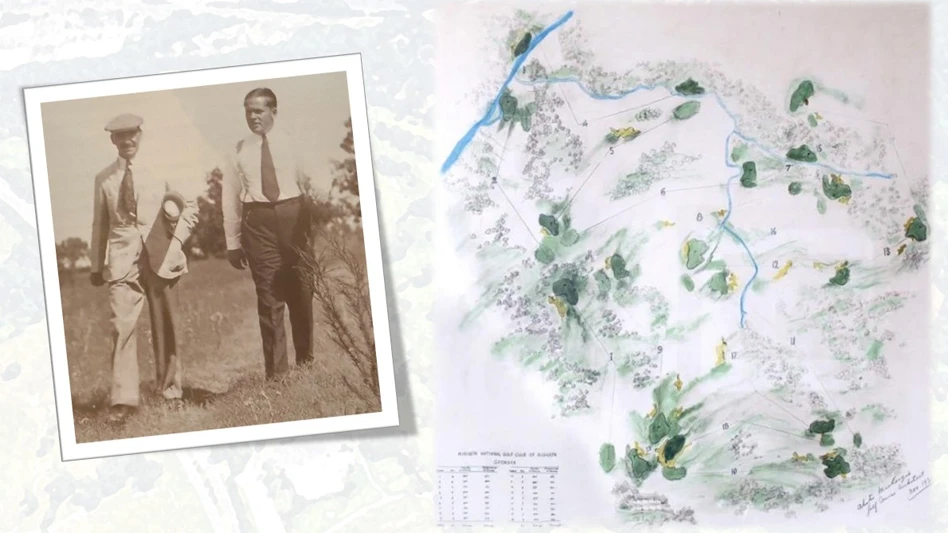
Costs for such a plan vary widely, from $15,000 to $250,000. There are no industry standards for the scope of the work. The quality will vary from a simple, annotated color plan of the course to a detailed bound book presenting course evolution, hole-by-hole detail, an itemized budgetary spreadsheet and 3-D graphics of hole-by-hole before and after.
It’s understandable if clubs want to recruit the most famous architect they can secure. After all, it helps to make the case to the membership if you hire a well-known designer with an impeccable portfolio of U.S. Open restorations. But there are only a few such architects, and most of the time they won’t be interested, or they will already be too busy. Besides, there are dozens of fine architects of various levels of experience, and you can get a lot of value out of lesser-known names if they want the work and are willing to put the time into the project.
The fee is only part of the equation; in any case, it will be a small part of the larger budget over the long run. Indeed, over five or 10 years, there will be an evaluation of everything from irrigation, drainage, greens, bunkers, trees, teeing ground equity, mowing lines, turfgrass species and possible (partial) routing, practice range, short game area and cart paths — plus maintenance building, clubhouse, parking and landscape.
Once a plan is established, there will be further contractual commitments, including construction bidding and project management during the actual implementation. Those phases will often entail a flat fee for the drawing work and an additional cost for work in the field, usually based on a percentage of total project work.
The main thing is the initial phase — mapping out what is feasible. Only then will a green committee or renovation committee work with the designer and the board to draw up financial planning that can serve for a multi-year process, including capital, loans, initiation fees and assessments.
Again, having a plan in place does not mean you will implement it all at once, or even at all. It all depends upon money available over time. The main thing is the basic plan, followed by priorities. Some of it will be a slow, steady march. Occasionally, there will be opportunities for a major lift — or even a total shutdown.
In the absence of a master plan, a club can meander and lose focus. With one, a club can confidently proceed in addressing its long-term vision.

Explore the January 2026 Issue
Check out more from this issue and find your next story to read.
Latest from Golf Course Industry
- From the publisher’s pen: Humble giving
- Syngenta adds two to western U.S. team
- The Aquatrols Company introduces soil surfactant for Canada
- Bernhard and Company partners with Turf Equipment and Supply Company
- Rain Bird announces pair of partnerships
- The Links at Spanish Bay unveils redesign plans
- Westbrook CC picks Troon
- EnP introduces Foliar-Pak Fairway Complete