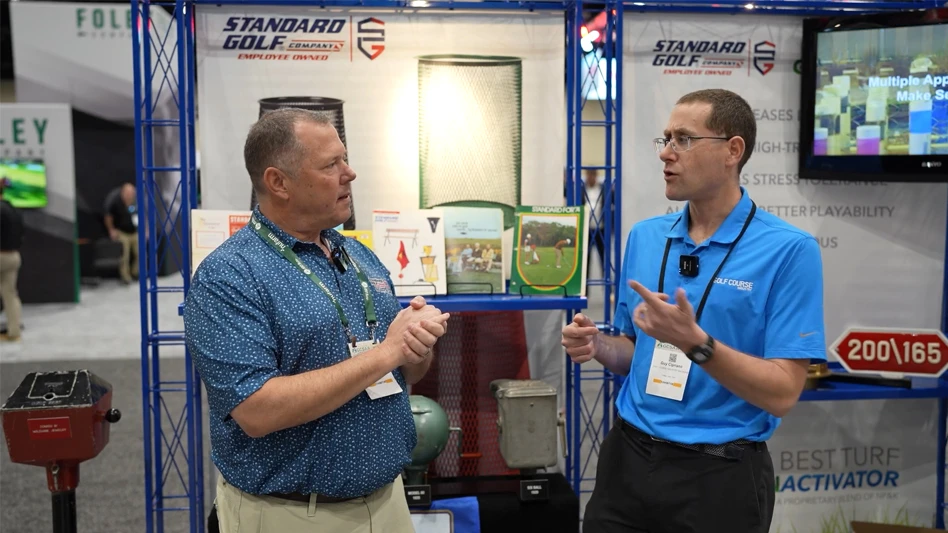
The golf industry has been scrutinized for years when it comes to pesticide usage. Megan Provost, president of Responsible Industry for a Sound Environment, believes superintendents are great environmental stewards and can use their role to properly inform and advocate for pesticide usage.
RISE is a national trade association working with manufacturers, formulators and distributors of specialty pesticides and fertilizers. Provost shared advice on how superintendents can be educated and inform others on handling questions on input usage in golf course maintenance.
How important is it for people working in the industry to keep up on issues dealing with the environment and environmental policy?
I think it’s really important, staying involved really at all levels of government, from their local government, a county council, a city council, up to state governments and what their state legislatures are doing and how they’re engaging, and the national government as well. We really encourage building those relationships with their elected officials, becoming a known resource so that if, for example, we see a bill introduced in a state that would negatively impact the golf course industry or the pesticide industry, those golf course superintendents have those relationships.
What would you tell a golf industry professional to do if they are questioned about input usage?
The advice that we always share is to be honest about it. Share your story. Talk about the benefits and why they do what they do. I think a lot of times folks can get intimidated by questions, but these guys know better than anyone what they’re doing, how they’re managing their golf courses, so they’re the people that are best positioned to answer the question. So just be honest with folks. We found that in the pesticide industry, just being honest about who we are and what we’re doing really goes a long way in developing trust and being able to have a relationship with folks. If we show any kind of hesitancy there, then it seems to make folks kind of draw back and not want to engage in a conversation. I know a number of GCSAA members who have stepped up and volunteered to give tours for state regulators, or even EPA regulators, helping to educate our regulators, helping to educate the public, sharing their story of what they do as the folks on the front line using these products, who know these products better than almost anybody.
Where can industry pros go to be more educated on policy issues and topics?
I would say the GCSAA is a great place to start. GCSAA has some amazing resources. We work closely at RISE with the GCSAA staff and they do a great job trying to get information to their members. RISE is another one. I would point to us as a resource, specifically around pesticides and fertilizers. We try to share information, offer webinars, training, talking points and resources to folks who are on the front line and dealing with it. And then I think the third one I would point folks to is the EPA.
What are some of the environmental issues that golf course industry workers should be aware of?
Water quality is kind of a cornerstone of environmental responsibility on golf courses and golf course professionals have the ability to be able to speak on behalf of that on some of the fantastic innovative programs that they have in place to keep water clean on courses and in their communities. So being advocates for the work that they do there, it’s really important.
Explore the March 2025 Issue
Check out more from this issue and find your next story to read.
Latest from Golf Course Industry
- Reel Turf Techs: TJ Vollmar
- Bernhard and Company names G.C. Duke as North American Distributor of the Year
- Course at Sewanee picks KemperSports for management
- WiTricity expands wireless charging technology
- Shining star
- SiteOne Landscape Supply acquires Reinders
- Talking Turf Weeds 17: Waking up your course after winter with Yusif Jaouni and Matt Herrmann
- From the publisher’s pen: Respect the side hustle