I sometimes use this column to talk directly to the golfers who play your course. They could all use more education about what we do, how we do it and why it’s important. I hope you can post this in the locker room, get it reprinted in the club newsletter, or put it on the website. And let them know it’s from me, someone who in four decades has worked on and set up every type of course — from municipals to U.S. Open venues — and wants to be sure they have a better experience on the course while making your life a little easier.
After their family, the thing that golf course superintendents love most is their golf course. Watching it thrive like one of their children is a pleasure. Watching it decline, not so much. Your superintendent is a trained expert in numerous sciences, from agronomy to meteorology, and is well aware of what they’re dealing with and the conditions on the course, even after a miserable, record-setting summer like the one just ended. There’s likely nothing you’ve noticed that they aren’t already well aware of.
I’m pointing out the above in case you’re thinking of criticizing the job your superintendent is doing. I’m not saying you shouldn’t or can’t complain; stuff happens, and every good set of eyes should be encouraged. But before you say anything, look at your hands: Have they ever done this kind of work? You shouldn’t be afraid to talk to your superintendent. I’d just ask that you follow these rules.
No. 1: If you have a problem with the golf course, go to the source. A good superintendent should be visible, riding the course several times a day. At the very least, their work email and phone number should be easy to find. But never blindside them, especially in a committee meeting or in front of other members, golfers or club staff.
No. 2: Don’t go behind the superintendent’s back and complain to the golf pro. Besides being underhanded, it’s stupid: The pro rarely knows much about turf and the environment. Would you ask them for tips on caring for your lawn? It also puts the pro in an awkward spot. Again, go to your superintendent with any comments or questions. If you do go to the pro, notice how they respond. They should direct you to the superintendent and/or the green committee. If not, you might be stepping into the middle of a whole different kind of situation.
No. 3: Weather is an excuse. Just like you, it can’t be controlled. So, if after a week of rain, the “cart path only” signs go up, don’t question them, and spare me the excuse that “I know where to drive.” You probably don’t.
No. 4: Don’t ask the superintendent at another course what’s wrong with yours. Again, that’s dirty pool, and now you’ve put both of them in no-win situations. Hopefully, the “other” superintendent has more balls than you do and tells you to talk to their counterpart at your course.
No. 5: Even worse is inviting the other superintendent to play your course without telling your super that a fellow turf pro is coming over. And I don’t buy the “he’s just a good friend and I wanted him to see the course …” excuse.
No. 6: Don’t hide behind the anonymity of a member survey or sit in the 19th hole bitching about the course with your buddies. If you have a question or a problem, go to the source for the information you desire. But probably not after you’ve had a few beers.
No. 7: Take whatever you read on the internet with a grain of salt. As with most topics, there is so much misinformation floating in cyberspace, it’s impossible to determine what is accurate or true. Are you performing your own knee replacement surgery after scrolling through WebMD?
No 8: Don’t compare apples and oranges. Even the course next door is different from yours. And the ones you see on TV get more investment of money and manpower in the weeks before a tournament than your course gets in a year or more. All things are not equal, from budget to labor to microclimates. Even if your club has multiple layouts, they are not the same.
No. 9: You are not seeing the whole picture. A lot is happening underground — irrigation, drainage, green construction, root growth, on and on. Agronomy is a complex science with lots of competing factors. It’s not just mowing the lawn.
No. 10: Superintendents didn’t get into the business to be thanked. They did it to care for the golf course and to provide the best possible playing experience to their golfers.
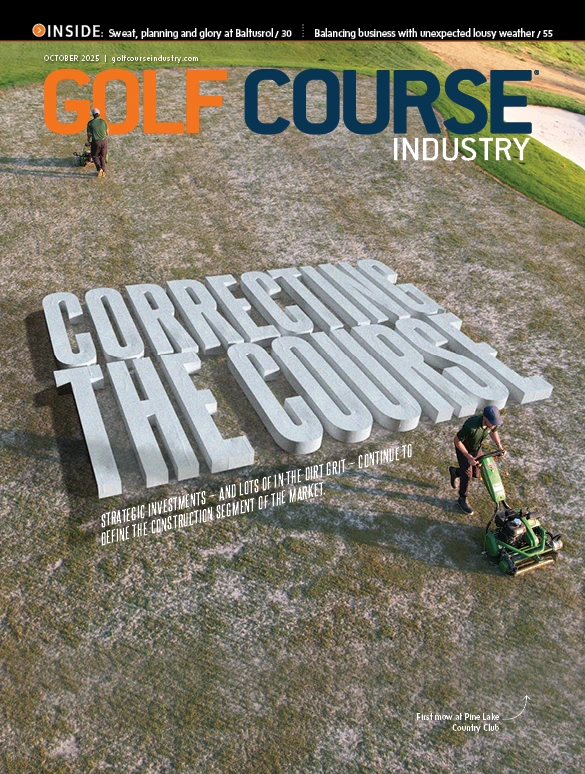
Explore the October 2025 Issue
Check out more from this issue and find your next story to read.
Latest from Golf Course Industry
- From the publisher’s pen: Respect the side hustle
- Super-Scratch events to expand nationally
- Beyond the Page 78: Labor solutions, AI talk and mayhem
- Construction progresses at The River Club
- VIDEO: A century of innovation
- Sentosa Golf Club preps next generation of turf pros
- Western turf leaders honored by GCSAA for advocacy efforts
- The Canary flies out of the mines