Adobe Stock


Hill Top Executive Golf Course recently found itself in a batty situation.
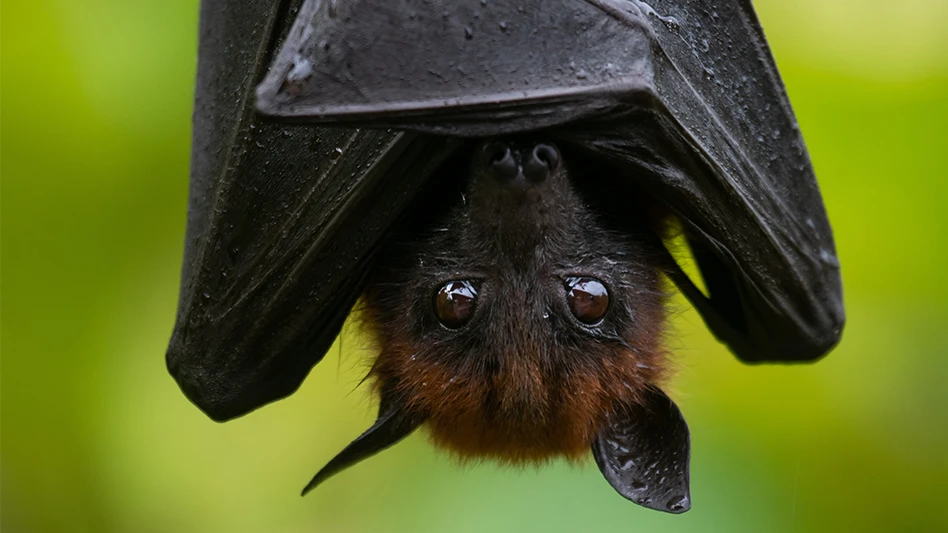
The 18-hole course, a part of The Villages community about 45 miles northwest of Orlando, Florida, discovered a bat infestation in the starter’s building. Anywhere from 100 to 300 bats found themselves a home, proving a danger to customers and employees. Bats can carry and spread diseases such as rabies and can carry viruses deadly to humans. Their immune systems allow them to carry harmful diseases without affecting the bat themselves. If contact with a human occurs, it can be deadly.
Some fun facts about bats: bats are the only flying mammal, they can travel as fast as 100 mph depending on the species, and more than half of bat species are considered endangered.
Removing the species isn’t as easy as hiring an exterminator. Bats are heavily protected in Florida, and their removal is banned between April 15 and Aug. 15, during their mating season. When Aug. 15 finally arrived, director of executive golf maintenance Donald Jones started trying to remove the nocturnal animals.
“We had to put up nets around the building to where the bats could get out, but they couldn’t get back in,” Jones says. “Once you put the nets up, then you couldn’t disturb them again for another seven days. So, we would have to check in seven-day intervals. After doing that quite a few times, we finally got to the end of it and they were out.”
Although a potential danger to humans, bats are a great benefit to the golf course itself. Bill Williamson, a board member of the Amenity Authority Committee, recommended implementing bat boxes throughout the course to give the bats a home they won’t need to be removed. Williamson, Jones and other team members collaborated with The Villages’ woodshop workers on designing and building six houses.
Three were placed on Hill Top, with the other three placed at Silver Lake Executive Golf Course, another course in The Villages.
“The plan going forward is that this is a trial run to see if we do gain some traction with this, and if we do, then we want to continue to start adding these on more courses going forward,” Jones says. “Not only are we giving a good habitat for the bats to go in, but they also provide so much other stuff for the environment.”
Bats are a primary predator of mosquitoes and in Florida, as Jones says, “the less mosquitos we have, the better.” Bats can eat their entire body weight in insects — up to 1,200 mosquitoes in just an hour.
In the long run, bats can encourage less insecticide usage.
The Villages, the largest retirement community in the United States, is home to 42 executive courses. Jones oversees their maintenance with the help of superintendents and assistants. Outside of the bat houses, conservation is a high priority for The Villages and their courses. “The Villages is all about that, and anywhere that we can incorporate it, we will definitely do it,” Jones says.
Environmentally protected areas are found throughout the courses with posted signs describing the area and why it's protected. Pollinator gardens designed to attract monarchs are continuing to be incorporated as courses are renovated.
Regarding sustainability, Jones says it’s a high factor in decision making: “In order for us to continue doing what we do and provide the products that we have, we have to really keep that in mind. We are surrounded by a lot of water here in Florida. We do everything that we can to protect waterways from chemicals and things like that. We try to be as safe as possible.”

Explore the December 2025 Issue
Check out more from this issue and find your next story to read.